Daily Shringar of Laddu Gopal, Simple Morning Seva Routine (10-Minute Guide)
A practical guide to daily shringar for Laddu Gopal and Kanha Ji, best fabrics, daily dress rotation, and a simple morning seva routine that fits real life.
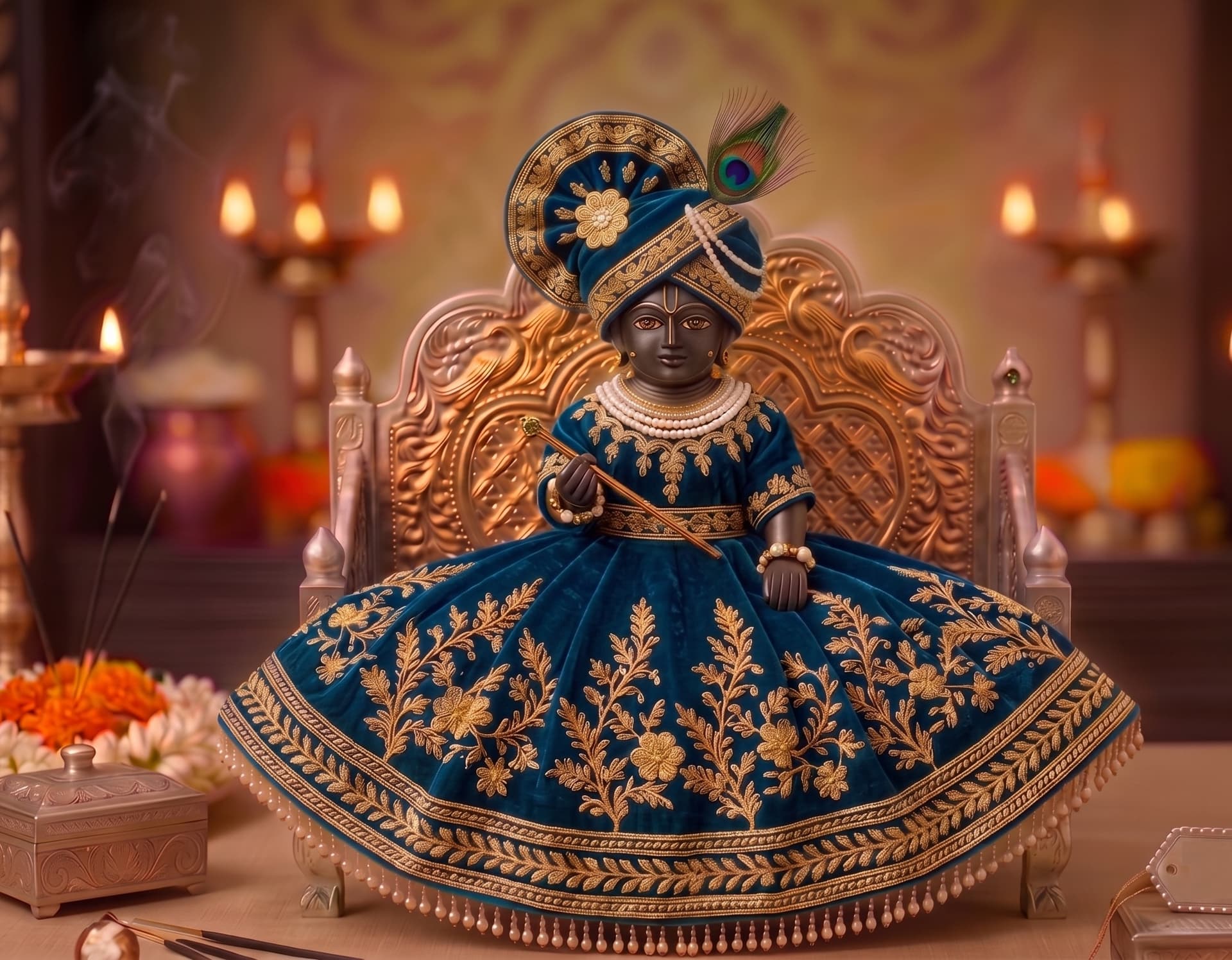 Daily Shringar of Laddu Gopal, Simple Morning Seva Routine (10-Minute Guide)
Most mornings do not feel sacred.
There is chai to make, a phone to check, children to get ready, work starting too soon. The mandir is there, Kanha Ji is waiting, and somewhere between everything else, the shringar happens. Sometimes with full attention. Sometimes in a hurry. Sometimes barely at all.
If this sounds familiar, you are not a bad devotee. You are a real one.
This guide is not about doing more. It is about doing what you already do, with a little more intention, a little more ease, and a poshak routine that actually works for daily life rather than fighting against it.
This guide draws from conversations with longtime Laddu Gopal devotees and the experience of working closely with karigars in Vrindavan who understand what daily wear poshak actually needs to withstand. Last updated April 2026.
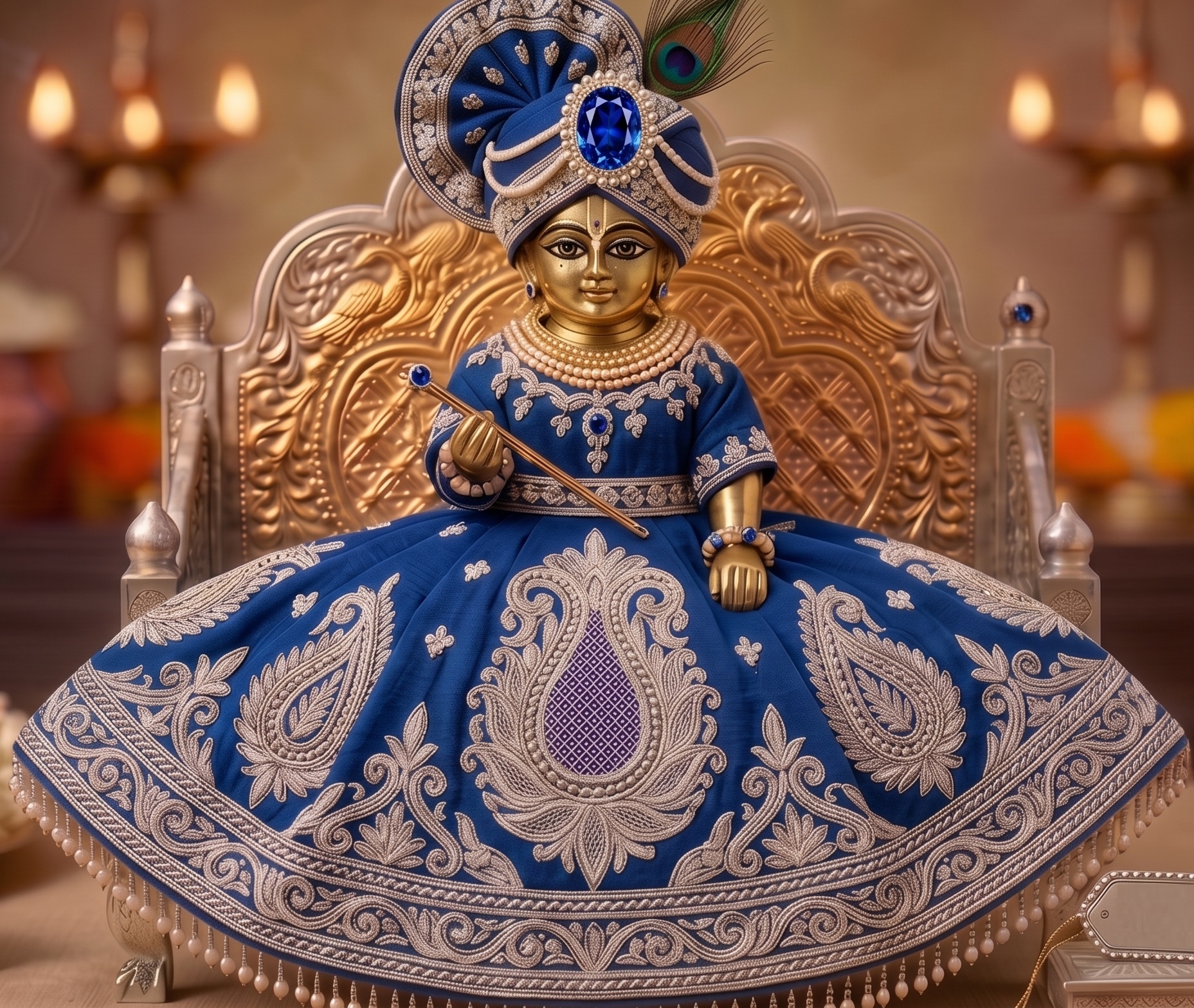
What is daily shringar for Laddu Gopal? Daily shringar is the everyday seva of dressing Laddu Gopal or Kanha Ji with a fresh poshak, a simple bhog, and basic mandir care each morning. Unlike festival shringar which focuses on elaborateness, daily shringar focuses on consistency, softness of fabric, and genuine presence, done in as little as ten minutes, every single day.
Quick Reference, Daily Shringar Essentials
- Daily poshak should be soft, washable, and easy to change
- Cotton and malmal are the best fabrics for everyday Kanha Ji dress
- Keep a rotation of 5–7 poshaks so each gets rest between wears
- Shringar does not need to be elaborate, it needs to be present
- Save heavy poshak and handwork dress for festivals and special occasions
Why Daily Shringar Matters More Than Festival Shringar
There is a tendency to save the best for big occasions. The finest Laddu Gopal dress comes out for Janmashtami. The handmade Kanha Ji poshak with the real zari work appears for Navratri. The everyday poshak is whatever was easiest to find that morning.
This is completely understandable. But it misses something important.
Kanha Ji is not a guest who visits on festivals. He lives in your home, in your mandir, every single day. The quality of your daily seva, not just the grand occasions, is where your real relationship with him lives.
This does not mean you need an expensive Laddu Gopal dress for Tuesday morning. It means that even the simplest daily poshak, chosen and placed with care, carries more devotion than the finest heavy poshak put on without attention.
Daily shringar is where bhakti actually lives. Festivals are where it is celebrated.
"Kanha Ji is not a guest who visits on festivals. He lives in your home, every single day."
The Daily Poshak Problem Nobody Talks About
Here is what actually happens in most homes.
A devotee buys two or three poshaks for Kanha Ji. One is saved for festivals. The other one or two rotate every day, same poshak, sometimes for weeks, until the color fades, the embroidery starts pulling, or it simply starts looking worn.
The poshak gets washed, often more aggressively than it should be. The fabric stiffens. The shine disappears. And because replacing poshaks feels like an expense rather than a necessity, the worn one stays on longer than it should.
Meanwhile, the festival poshak stays pristine in a box because there is always a reason to save it for later.
The result: Kanha Ji wears the most worn poshak every day and the best one a few times a year.
There is a simple fix for this, and it costs less than most people expect.
Building a Daily Poshak Rotation for Laddu Gopal
The single most practical change any Laddu Gopal devotee can make is building a small rotation of dedicated daily poshaks, separate from festival and special occasion poshak.
Why rotation matters:
Every fabric needs rest. When the same Kanha Ji poshak is worn daily and washed frequently, it degrades much faster than one that rotates with four others. A rotation of five to seven poshaks, each worn once or twice before washing, will last two to three times longer than a single poshak used daily.
This is not extravagance. It is actually more economical, and it means Thakur Ji always looks cared for, not worn down.
What a good daily rotation looks like:
For most households with a size 3 or size 4 Laddu Gopal, a practical daily rotation includes:
- 2–3 soft cotton poshaks in different colors for weekday mornings
- 1–2 slightly more refined cotton-silk poshaks for weekends or Ekadashi
- 1 designated poshak for each day of the week if you follow the tradition of day-specific colors
This gives you variety, preserves each piece longer, and means you are never reaching for the same tired poshak again.
Not sure about your idol's size? Our Laddu Gopal poshak size chart explains exactly how to measure in under two minutes.
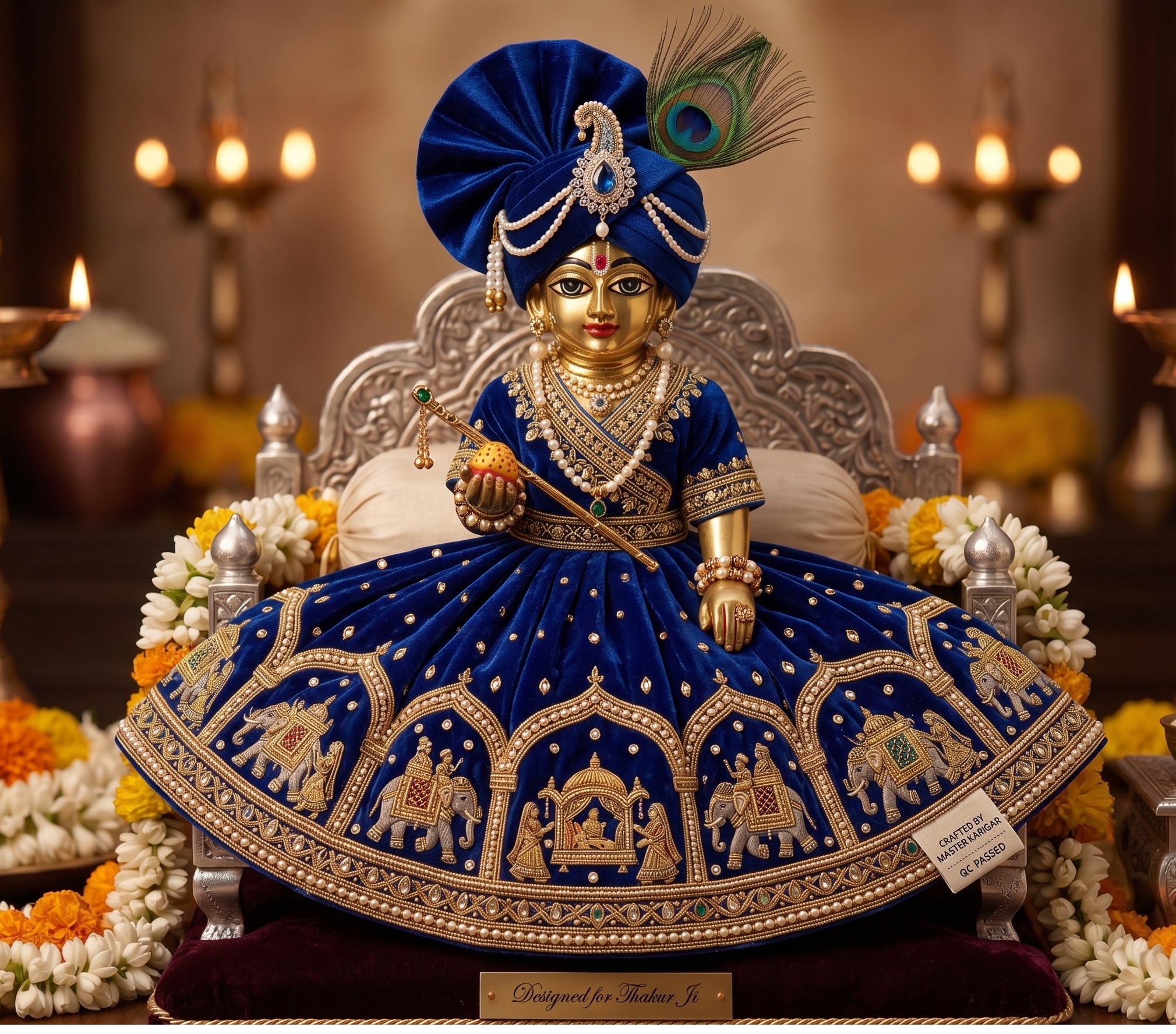
The Best Fabrics for Daily Laddu Gopal Dress
This is where most buying decisions go wrong. Devotees often choose daily poshak the same way they choose festival poshak, by how it looks in a photograph. But daily poshak has completely different requirements.
The non-negotiables for daily Kanha Ji poshak:
- Must survive regular gentle washing without losing shape or color
- Must be soft enough not to feel rough against the idol
- Must drape naturally without stiffening after the first few wears
- Must be easy to put on and remove quickly during a morning routine
Cotton and Malmal, The Best Choice for Daily Wear
Soft cotton and malmal are genuinely the best fabrics for daily Laddu Gopal dress. They breathe, wash easily, hold their color reasonably well, and feel appropriate across all seasons.
A good quality cotton poshak for Kanha Ji in size 3 or 4 will give you months of daily wear if it is part of a rotation and hand washed properly. The texture of cotton also photographs beautifully in natural morning light, which matters if you photograph your mandir for your own memory or for sharing.
For summer specifically, a Laddu Gopal summer dress in malmal or fine cotton is not just a practical choice, it is a respectful one. Heavy fabric in April or May heat feels incongruous with the season and with Kanha Ji's well-being in your care.
Cotton-Silk Blends, For Slightly Elevated Daily Wear
If you want something slightly more refined for daily shringar without crossing into festival territory, a cotton-silk blend strikes the right balance. It has the softness and washability of cotton with a subtle sheen that elevates the look without requiring the care of pure silk.
These work beautifully for Ekadashi, Mondays for Shiva devotees who also observe Monday shringar, or simply for days when you want the mandir to feel a little more special.
What Not to Use Daily
Heavy poshak, handmade Kanha Ji poshak with dense zari work, handwork dress with intricate embroidery, Kanha Ji designer choli with heavy embellishment, these are not daily wear. Not because they are too good, but because daily washing and handling genuinely damages hand embroidery, real zari, and delicate threadwork far faster than occasional festival use.
Save your Laddu Gopal heavy dress and your handcrafted festival poshak for when they are meant to be worn. They will last far longer, look far better, and feel far more special when the occasion arrives.
For guidance on what to wear on specific festivals, our Akshaya Tritiya shringar guide covers fabric and color selection for one of the most auspicious days of the year.
Daily Shringar by Season, What Changes Through the Year
One of the most thoughtful things a devotee can do is align Kanha Ji's daily poshak with the rhythm of the season. Temple traditions have always dressed deities according to season, weather, and the spiritual calendar, this is not a modern idea.
Summer (March–June)
Light cotton, malmal, soft georgette. Pale colors, white, soft yellow, pastel green, sky blue. A Laddu Gopal summer dress in breathable fabric is both practical and respectful of the season. This is also the time for Basant Panchami transitions and Holi, a Holi Special Poshak in bright, joyful color feels exactly right during this period.
Monsoon (July–September)
Continue with cotton but move toward deeper, richer colors, peacock, deep green, violet. The monsoon in Vaishnava tradition is associated with the beauty of Vrindavan in the rains, Kanha Ji's own season. A Kanha Ji poshak in deep green or blue during monsoon has a particular resonance that devotees who have tried it will recognize immediately.
Winter (October–February)
This is when the woolen gol poshak earns its place in the daily rotation. Warm, enveloping, and full in shape, it looks gentle and protective in a way that cotton cannot replicate in cold months. Velvet poshak and cotton-velvet blends also work beautifully for daily winter shringar.
For Radha Rani, the Traditional Radha Rani Chunri and Chandrika set works gracefully across all seasons, one of the most timeless daily shringar options available.
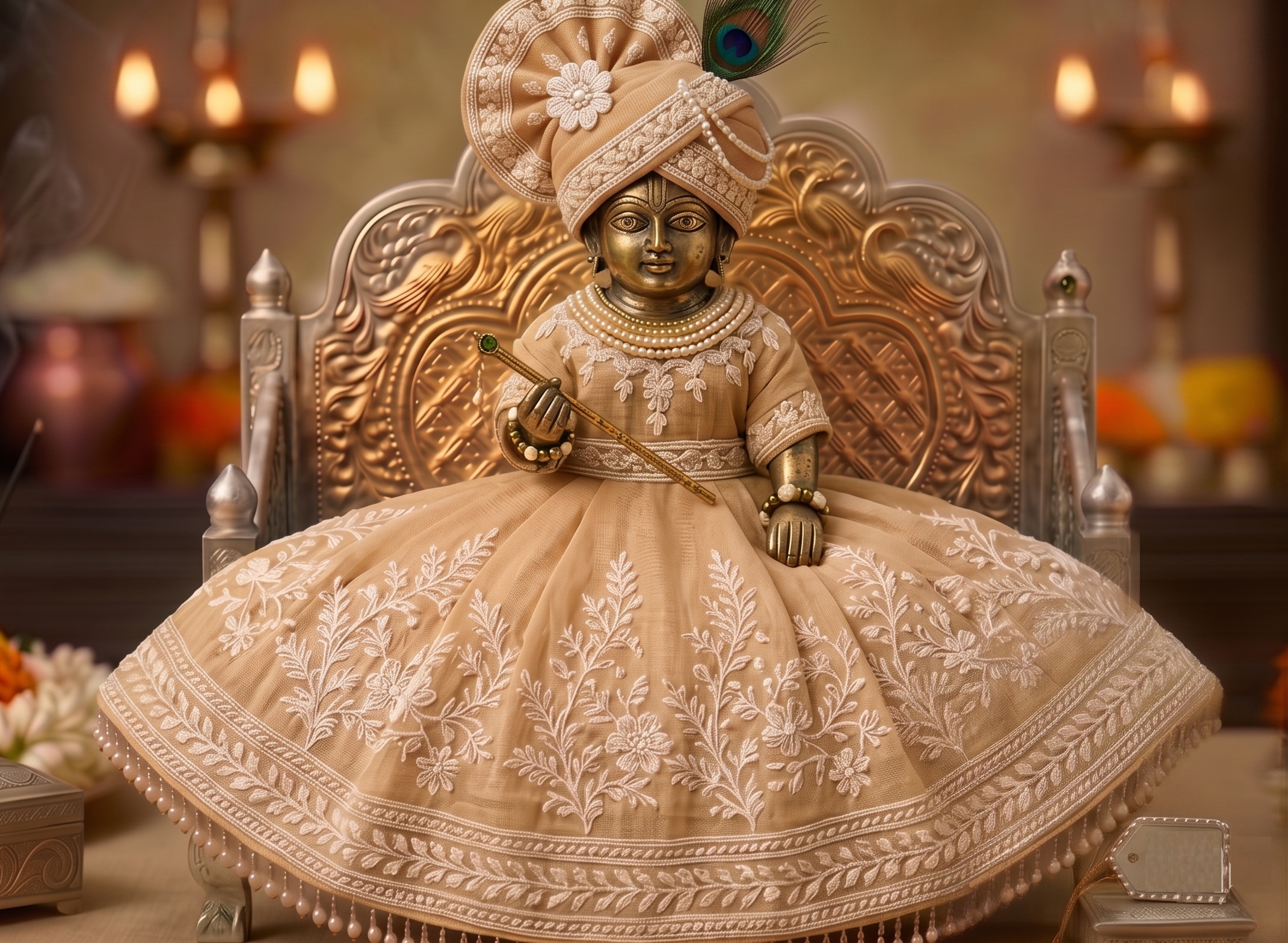
The Colors of the Week, A Traditional Daily Shringar Practice
Many Laddu Gopal devotees follow the tradition of dressing Kanha Ji in specific colors based on the day of the week. This is a practice rooted in both astrological and devotional tradition and gives your daily poshak rotation a natural structure.
| Day | Traditional Color | Why |
|---|---|---|
| Monday | White or light grey | Associated with the moon, purity |
| Tuesday | Red or orange | Associated with Mars, energy |
| Wednesday | Green | Associated with Mercury, growth |
| Thursday | Yellow or gold | Associated with Jupiter, wisdom |
| Friday | White or cream | Associated with Venus, grace |
| Saturday | Blue or purple | Associated with Saturn, depth |
| Sunday | Orange or saffron | Associated with the sun, vitality |
For Kanha Ji specifically, Thursday yellow, pitambar, is considered the most sacred and is widely followed. Many devotees use Thursday as their most intentional shringar day of the week, even if daily shringar is otherwise simple.
A Simple 10-Minute Daily Shringar Sequence
This sequence works even on the busiest mornings. It is not abbreviated, it is complete. Good shringar does not require more time, just more presence.
1. Begin before you touch anything (1 minute)
Before opening the mandir, take one slow breath. Not a technique, just a pause. The transition from the rest of the morning into seva benefits from even thirty seconds of shift in attention.
2. Snaan (2 minutes)
A gentle wipe with a clean, soft cloth dampened with clean water or rose water. For daily shringar, a full panchamrit snaan is not required, that is reserved for special occasions. A clean, respectful wipe is sufficient and appropriate.
3. Choose today's poshak (1 minute)
Lay it out. Smooth it. Take a moment to look at it before putting it on Kanha Ji. This one act, of actually seeing what you are about to offer, changes the quality of the shringar entirely.
If you are building your daily rotation for the first time, our Kanha Ji dress collection has cotton and cotton-silk options designed specifically for everyday wear.
4. Dress Kanha Ji (2 minutes)
Settle the Laddu Gopal dress gently. Arrange the front. Center any embroidery or border detail. Step back and adjust once.
5. Mukut and accessories (2 minutes)
Place the mukut. Straighten it. Add a fresh flower if available, even a single marigold or a small jasmine. If no fresh flower is available, a tulsi leaf carries the same devotional weight in Vaishnava tradition.
6. Bhog and diya (1–2 minutes)
A small offering, even a single piece of mishri or a small pedha, and the diya. The diya does not need to burn for long. The act of lighting it is the offering.
Total: 10 minutes. The mandir is ready. Kanha Ji is dressed. The day has begun differently from how it would have without this.
Daily Shringar for Radha Rani and Yugal Jodi
For those who keep both Radha Rani and Kanha Ji, either as a Kanhaji Darbar, a Yugal Jodi, or as a full Radha Krishna poshak pairing, daily shringar has an added dimension.
The principle is harmony. Radha Rani and Kanha Ji's daily poshak should complement each other in color and tone, even if they are not identical. A matching Yugal Jodi dress for daily use is a beautiful option, coordinated without being uniform.
For daily Radha Rani poshak, the same fabric principles apply as for Kanha Ji, soft cotton or cotton-silk for everyday, saving the handcrafted Radha Rani lehenga and the Radha Rani heavy poshak for festivals. The Traditional Radha Rani Chunri and Chandrika is an exception, it works gracefully for daily wear because of its simplicity and its traditional form.
For Sharad Poornima, the Radha Rani white and golden poshak holds a special place, but that is a seasonal occasion, not a daily one. Its beauty is partly in its rarity.
What Daily Shringar Does for You, Not Just for Kanha Ji
This is something most guides will not say directly.
Daily shringar is not just about what Kanha Ji receives. It is about what you receive.
The ten minutes you spend in front of the mandir each morning, with your hands occupied, your attention directed somewhere outside of the usual noise, your breath slower, is one of the few moments in a day that belongs entirely to something beyond productivity.
Devotees who maintain daily shringar consistently often describe the same thing: the mornings they skip it feel different. Not guilty, just incomplete. Something that was grounding is missing.
That grounding is what daily shringar actually provides. Not merit. Not ritual obligation. Just a moment, every day, of genuine presence.
And the poshak you choose, the care you take, the flower you place, these are not decorations. They are the physical form your attention takes.
At Divyambar, our daily shringar collection is built around exactly this, poshak that is beautiful enough to feel like an offering and practical enough to actually live in your daily routine. Soft fabrics, clean finishes, colors that photograph well in morning light. Designed for the devotee who shows up every day, not just on festivals.
Frequently Asked Questions
Which poshak is best for daily shringar of Laddu Gopal?
Soft cotton or malmal Laddu Gopal dress is the best choice for daily shringar. These fabrics are gentle, breathable, washable, and appropriate across seasons. Save heavy poshak, handmade Kanha Ji poshak with embroidery, and handwork dress for festivals and special occasions.
How many poshaks should I keep for Kanha Ji's daily rotation?
A rotation of five to seven daily poshaks is ideal. This allows each poshak to rest between wears, extends the life of each piece significantly, and means Thakur Ji always looks fresh and cared for. Two to three cotton poshaks plus one or two slightly refined cotton-silk options covers most daily needs.
What is the difference between daily poshak and festival poshak for Laddu Gopal?
Daily Kanha Ji poshak prioritizes softness, washability, and ease of changing. Festival poshak, like a Janmashtami special heavy zari dress, a Laddu Gopal heavy dress, or a handcrafted heavy poshak, prioritizes visual richness and elaborateness. Using festival poshak daily damages the embroidery and zari work quickly through repeated washing and handling.
Which color poshak is right for each day of the week?
Yellow or gold on Thursday (the most sacred for Kanha Ji), white on Monday, red or orange on Tuesday, green on Wednesday, white or cream on Friday, blue or purple on Saturday, and saffron or orange on Sunday. Many devotees simplify this to yellow on Thursday and their personal preference for other days.
How do I wash a daily cotton poshak for Laddu Gopal?
Hand wash in cool water with mild detergent. Do not scrub, gently squeeze the fabric through the water. Rinse well and air dry in shade, away from direct sunlight which fades color. Do not wring or twist. For poshak with any border embroidery, wash inside out to protect the detailing.
Can I use the woolen gol poshak for daily winter shringar?
Yes, the woolen gol poshak is one of the best daily options for winter. It is warm, enveloping, and sized generously so it is easy to put on and remove. It also requires less frequent washing than cotton, making it practically convenient for daily use through the cold months.
What is the best daily poshak for Radha Rani?
The Traditional Radha Rani Chunri and Chandrika is one of the most graceful daily options, simple, traditional, and appropriate for everyday seva. Soft cotton Radha Rani poshak in coordinating colors with Kanha Ji also works beautifully for daily Yugal Jodi shringar. Save the Radha Rani heavy poshak, handcrafted Radha Rani lehenga, and Radha Rani designer red velvet dress for festival occasions.
Is daily shringar necessary or is it enough to do it on special days?
There is no obligation, bhakti is never about obligation. But devotees who maintain even a simple daily shringar consistently describe a qualitative difference in their mornings and their relationship with their deity. The practice does not need to be elaborate to be meaningful. Ten minutes of genuine presence every day carries more weight than an elaborate festival shringar done once a month.
#laddugopaljiposhak #laddugopaldress #poshak #kanha #radheradhe #radhakrishna #jaishreekrishna #janmashtami #dailyshringar #thakurji #kanhajikirpa #laddugopallover #vaishnavbhakti