How to Dress Laddu Gopal for Janmashtami — A Complete Poshak Guide
Everything you need to know about choosing the right poshak for Laddu Gopal on Janmashtami — fabric, size, color, and the little details that make shringar truly special.
 How to Dress Laddu Gopal for Janmashtami — A Complete Poshak Guide
There is a moment — you have probably felt it — when you finish dressing Thakur ji, step back, and something in your chest just settles. The mukut is straight, the poshak is falling just right, the flowers are fresh. It does not feel like a task you completed. It feels like a conversation you had.
That is what shringar is, really. Not a routine. A relationship.
And Janmashtami — the birthday of Shri Krishna — is the one occasion where that relationship deserves your absolute best. If you have ever stood in front of your mandir shelf wondering which poshak to pick, which fabric is right, whether the size will fit properly… this guide is for you.
Why the Right Poshak for Laddu Gopal Actually Matters
A lot of people treat the poshak as an afterthought. You buy whichever one looks nice in the photo, it arrives stiff and scratchy, the embroidery starts peeling after two washes, and you end up going back to the old one anyway.
The problem is not your taste. The problem is that most poshaks sold in the market today are made for photographs — not for your Thakur ji.
When you are selecting a Laddu Gopal poshak, especially for a significant occasion like Janmashtami, there are a few things worth thinking about seriously.
Choosing the Right Size Poshak for Your Laddu Gopal
This is where most people go wrong first. Laddu Gopal idols come in different sizes — typically measured in inches of height — and sizes 1 through 8 are the most common.
A quick reference:
- Size 1–2: Very small, 2–3 inches tall. These need extremely delicate, fine-fabric poshaks with minimal embellishment.
- Size 3–4: Most common for household mandirs. Good middle ground for embroidery and detailing.
- Size 5–6: Larger idols, usually placed on decorated singhasan. Can carry heavier Banarasi or zardozi work beautifully.
- Size 7–8: Temple-style, grand presence. Deserves full utsav poshak with elaborate mukut and shringar accessories.
If you are unsure of your idol's size, simply measure from the base of the feet to the top of the head (not including the mukut). That number in inches is roughly the size you need.
What Fabric to Choose — and What to Avoid
This is the part nobody tells you clearly enough.
Most synthetic poshaks look stunning in product photos. Under ring light, with good editing, even plastic-based fabric can look like silk. But once it arrives, you will immediately notice the stiffness, the faint chemical smell, and the way it does not drape naturally around the idol.
Here is what actually works:
For Daily Shringar
Go for soft cotton or malmal. Light, breathable, easy to change every day. Cotton poshaks in simple prints or solid colors with minimal border work are perfect for everyday seva. They also wash well and hold their color.
For Winter Months
Velvet poshaks are genuinely beautiful in winter — the texture photographs well and feels rich and warm. Pair with a small woollen shawl if your winters are cold. Some devotees also use pashmina blends during peak winter.
For Janmashtami and Major Festivals
This is where you can go all the way. Banarasi silk with original zari work is the gold standard. The way real zari catches light during aarti — nothing compares to it. You will also find georgette with heavy embroidery and raw silk with resham threadwork working beautifully for festival occasions.
One thing to be careful about: what is sold as "Banarasi silk" online varies enormously in quality. Look for weight, feel, and whether the zari is woven in (not printed). A good Banarasi poshak will feel slightly heavy when you hold it.
Colors for Janmashtami — What is Traditional and What Works
Shri Krishna's traditional colors are yellow (pitambar), blue, and peacock green. For Janmashtami specifically, yellow is considered the most auspicious — it represents joy, divinity, and celebration.
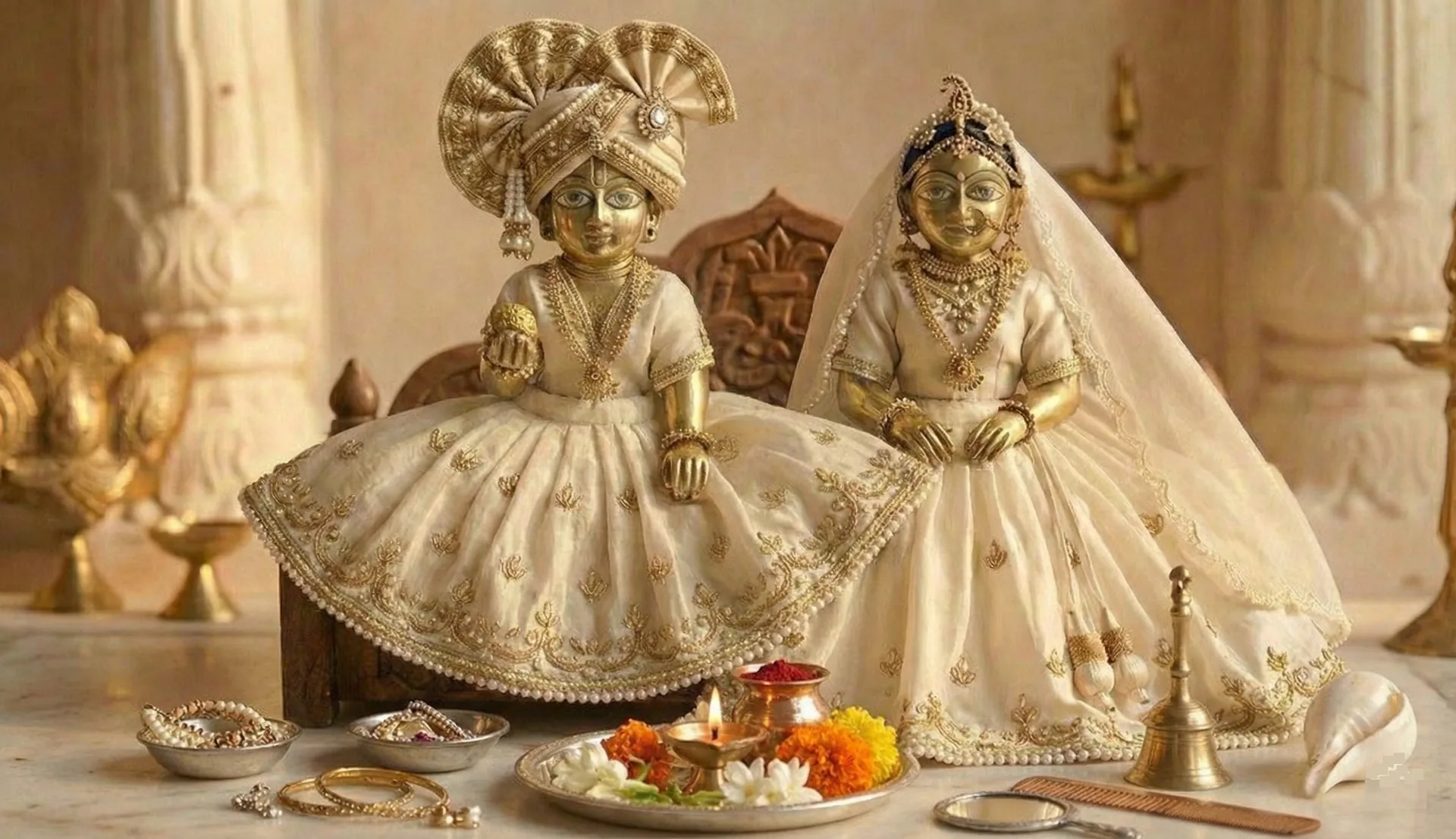
That said, many devotees also dress Thakur ji in white with gold work for Janmashtami midnight shringar, representing purity at the moment of birth.
Colors to consider:
- Midnight blue with gold embroidery — deeply traditional, stunning for aarti photographs
- Soft yellow (pitambar) with red border — classic and universally loved
- Ivory or off-white with zardozi — elegant, especially for the post-midnight shringar
- Peacock green with mirror work — vibrant, festive, great for daytime darshan
Avoid very dark colors like black or dark maroon for Janmashtami specifically — these are typically reserved for other occasions.
Step-by-Step: How to Dress Laddu Gopal for Janmashtami
If you are new to this, or if you want to do it more intentionally this year, here is a simple sequence:
1. Snaan (Bath) Start by giving Thakur ji a gentle snaan with panchamrit or clean water. Pat dry with a soft cloth — do not rub. This is the beginning of the shringar, not a separate step.
2. Prepare the Poshak Lay the poshak flat and gently press out any folds with your fingers. Do not use a hot iron directly on embroidered fabric — if needed, use a cloth in between.
3. Dress From the Bottom Most Laddu Gopal poshaks are designed like a cone or bag-style garment that slips over the idol from above. Settle the idol gently into the center so the poshak falls evenly on all sides.
4. Adjust the Edges Take a moment to arrange the front carefully. Any embroidery panel should sit centered on the front of the idol. Small pleats at the back are fine — the front is what you and your family see.
5. Place the Mukut The mukut should sit comfortably — not tilted, not forced. If your idol has a slightly different head shape, small cotton padding inside the mukut band helps it sit stable.
6. Add Accessories Last Haar (garland), bangles, and other accessories go on last, after the poshak is settled. Fresh flowers — even one small marigold — add something no artificial decoration can.
7. Step Back Seriously. Step back, take a breath, and look. Make any small adjustments. Then light the diya.
Common Mistakes to Avoid When Buying a Laddu Gopal Poshak Online
Since most poshak shopping happens online today, a few things worth keeping in mind:
Checking only the photo: Photos are shot with good lighting and styling. Always read the material description carefully and check reviews, particularly for mentions of fabric quality and sizing.
Ignoring the return policy: Sizing is genuinely tricky online. Make sure the seller has a reasonable exchange policy before buying an expensive festival poshak.
Buying too close to the festival: Good poshaks from quality sellers often go out of stock 1–2 weeks before Janmashtami. Order at least 3–4 weeks early if possible.
Washing embroidered poshaks in machine: Always hand wash or dry clean embroidered, zari, or heavy poshaks. Machine washing even on gentle mode will destroy the threadwork over time.
A Note on Bhav
Everything above is practical advice. But here is the part that matters more than any of it.
The quality of the poshak you offer Thakur ji matters — but not as much as the quality of attention you bring to the act of dressing him. A devotee who spends five unhurried minutes adjusting a simple cotton poshak with full presence is offering something more valuable than an expensive silk one put on in a hurry.
Shringar is seva. Seva is attention. Attention is love.
That is what Janmashtami is asking of you — not perfection, but presence.
Hare Krishna.
Frequently Asked Questions
Which size poshak fits a standard Laddu Gopal? Most households have a size 3 or size 4 Laddu Gopal. If you measure your idol's height in inches from feet to head, that number corresponds roughly to the poshak size you need.
What fabric is best for Laddu Gopal poshak on Janmashtami? Banarasi silk with original zari work is the traditional and most recommended choice for Janmashtami. For summer festivals, light cotton or malmal is more appropriate.
Can I wash an embroidered poshak at home? Yes, but always hand wash with mild detergent in cold water. Do not wring or twist. Lay flat to dry in shade. Never machine wash embroidered or zari poshaks.
What color poshak is traditional for Janmashtami? Yellow (pitambar) is the most traditional color for Janmashtami. Midnight blue with gold and ivory with zardozi work are also widely used and deeply beautiful for this occasion.
How far in advance should I buy a Janmashtami poshak? At least 3–4 weeks before the festival. Quality poshaks from reputed sellers go out of stock quickly as Janmashtami approaches.