Janmashtami Laddu Gopal Dress 2026 — Complete Poshak, Shringar & Decoration Guide
The complete guide to Janmashtami Laddu Gopal dress 2026. Best poshak, shringar sequence, mandir decoration, color and fabric guide, midnight puja timing, and Radha Rani Yugal Jodi styling for Kanha Ji's birthday.
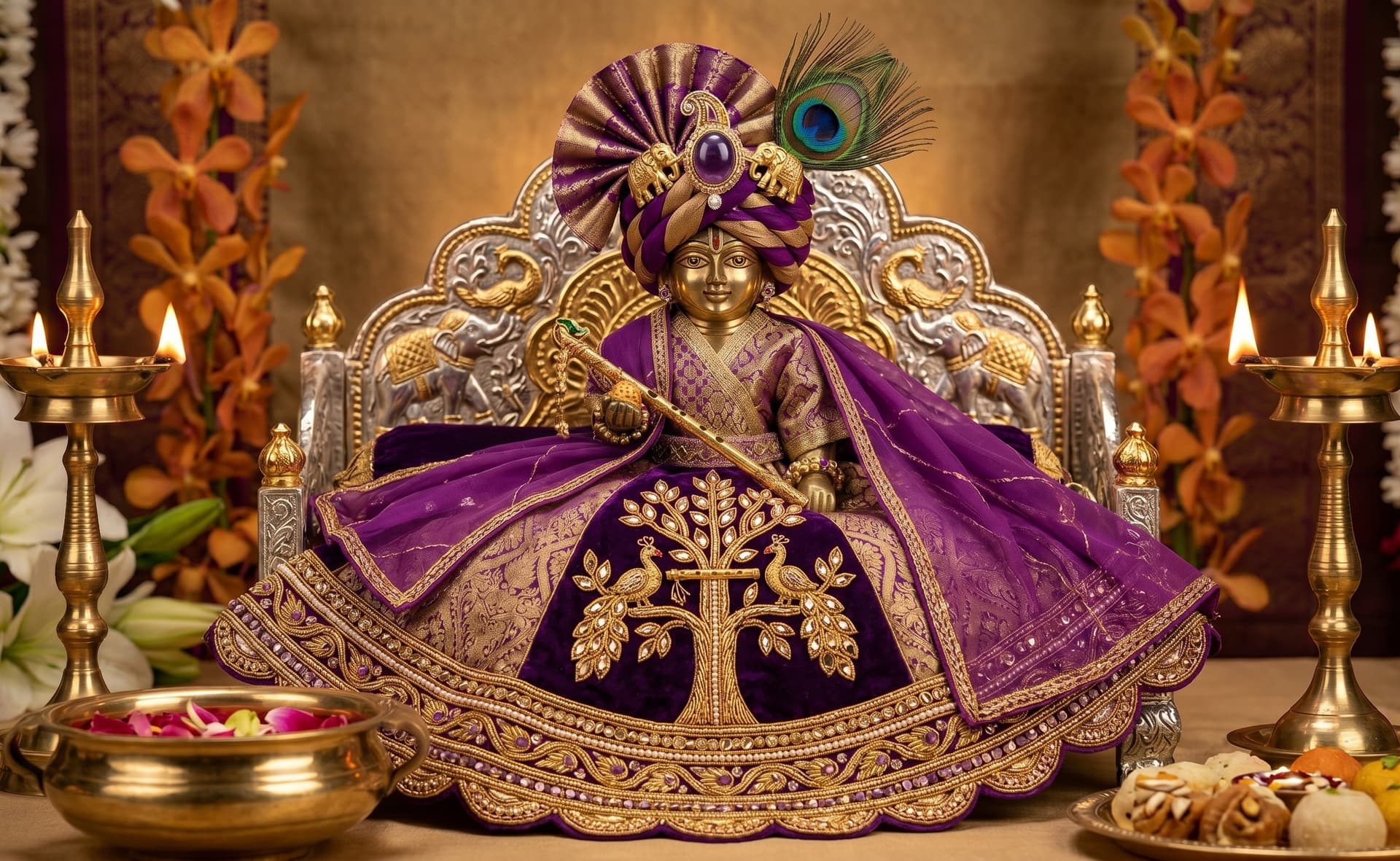 Janmashtami Laddu Gopal Dress 2026 — Complete Poshak, Shringar & Decoration Guide
Of all the days in the devotional calendar, there is one that feels different from the moment it arrives.
The house is quieter in the morning. There is a kind of held anticipation in the air. The mandir looks especially beautiful, or you notice that you want it to. And somewhere in the middle of everything,the planning, the prasad, the decoration, the aarti,there is one thought that keeps returning:
Kanha Ji ke liye sabse achha poshak chahiye. Aaj unka janamdin hai.
Janmashtami is Shri Krishna's birthday. And for every devotee who keeps Laddu Gopal at home, it is the one occasion where the shringar you offer carries a weight that no other day quite matches.
This guide covers everything,the best Janmashtami Laddu Gopal dress and Kanha Ji Janmashtami dress for 2026, fabric and color guidance, the complete midnight shringar sequence, mandir decoration ideas, and how to prepare in time for the most sacred night of the devotional year.
This guide is prepared with direct reference to Vrindavan poshak traditions and the Janmashtami shringar practices followed in devout households across North India. Janmashtami 2026 falls on Friday, September 4. Last updated August 2026.
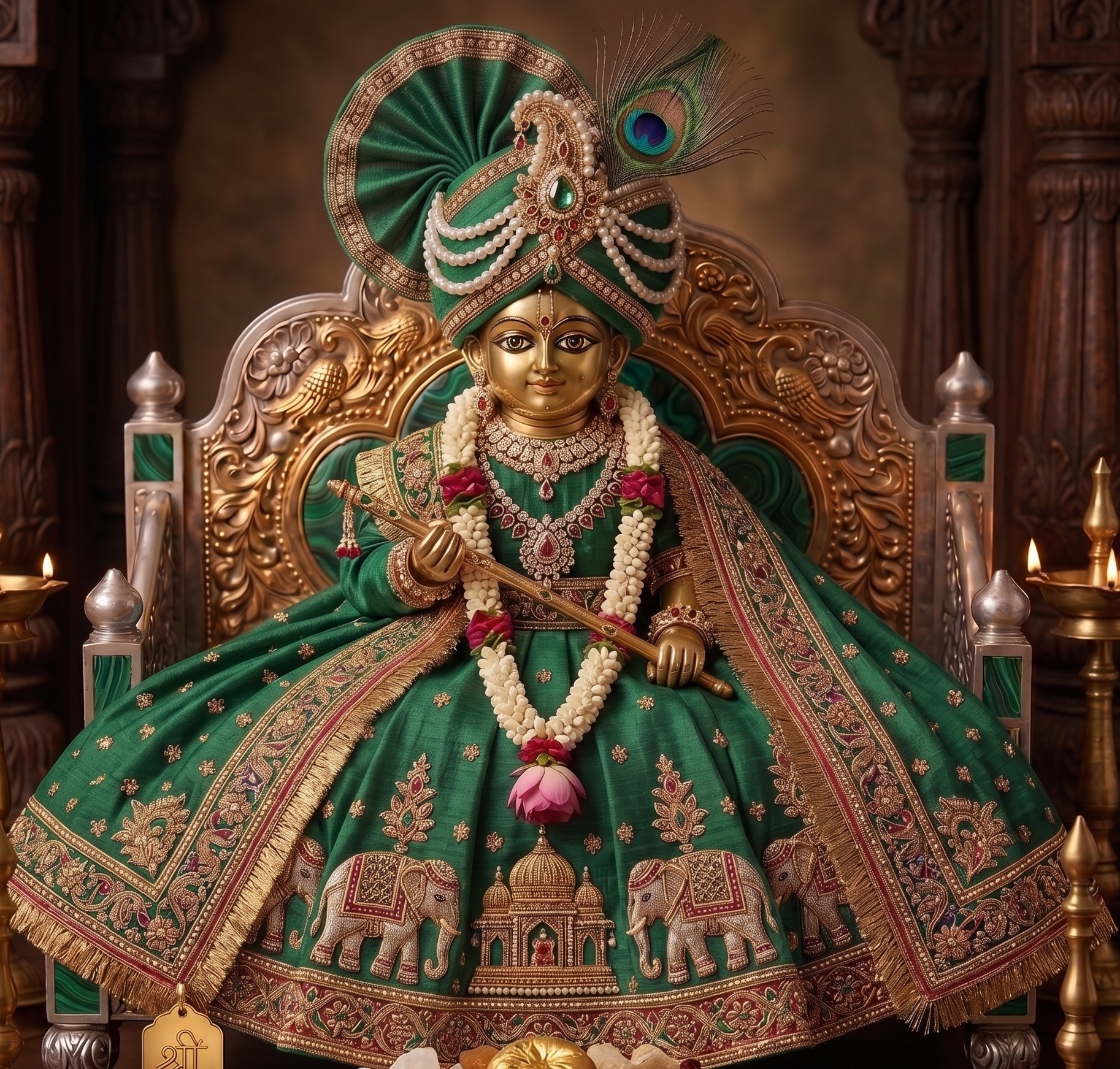
What is Janmashtami poshak for Laddu Gopal? Janmashtami poshak for Laddu Gopal is a specially chosen, typically elaborate dress offered to the deity on the occasion of Shri Krishna's birthday,the most significant festival for Krishna devotees. Janmashtami dress is usually heavier, more ornate, and more ceremonial than daily poshak,often made from Banarasi silk, heavy zari work, or richly embroidered fabric. The most traditional colors are yellow (pitambar), midnight blue, and gold.
Quick Reference,Janmashtami 2026
- Date: Friday, September 4, 2026
- Nishita Puja (Birth moment): 12:14 AM – 1:01 AM (night of Sept 4 into Sept 5)
- Dahi Handi: Saturday, September 5, 2026
- Best poshak colors: Yellow, midnight blue, gold, ivory
- Best fabric: Banarasi silk, heavy zari, handmade embroidery
- Order deadline: At least 3–4 weeks before Janmashtami to avoid stockout
- Size tip: For heavy poshak, go one size up from standard
Jump to: Significance · Poshak Guide · Colors · Fabrics · Shringar Sequence · Decoration · Yugal Jodi · FAQs
Why Janmashtami Shringar Is Different
Daily shringar is intimate. It is personal, quiet, and consistent,a conversation between a devotee and their deity that happens in the ordinary rhythm of the morning. For guidance on building that daily rhythm, our daily shringar guide for Laddu Gopal covers the complete morning routine.
Janmashtami shringar is a celebration.
On this night,particularly during the midnight Nishita Puja when Shri Krishna is said to have been born,every element of how Laddu Gopal is dressed, adorned, and presented carries the full weight of devotion. This is not the day for the daily cotton poshak. This is not the day to reach for whatever is convenient.
In temples across Vrindavan, Mathura, and the entire Vaishnava world, Janmashtami shringar begins days in advance. Karigars complete special poshaks. Flowers are ordered fresh. The entire mandir setup is reconsidered and renewed.
For a home devotee, the scale is different but the spirit is the same.
"Janmashtami ke din ka poshak sirf kapda nahi hota,woh ek offering hota hai. Ek prarthna. Ek love letter to the divine."
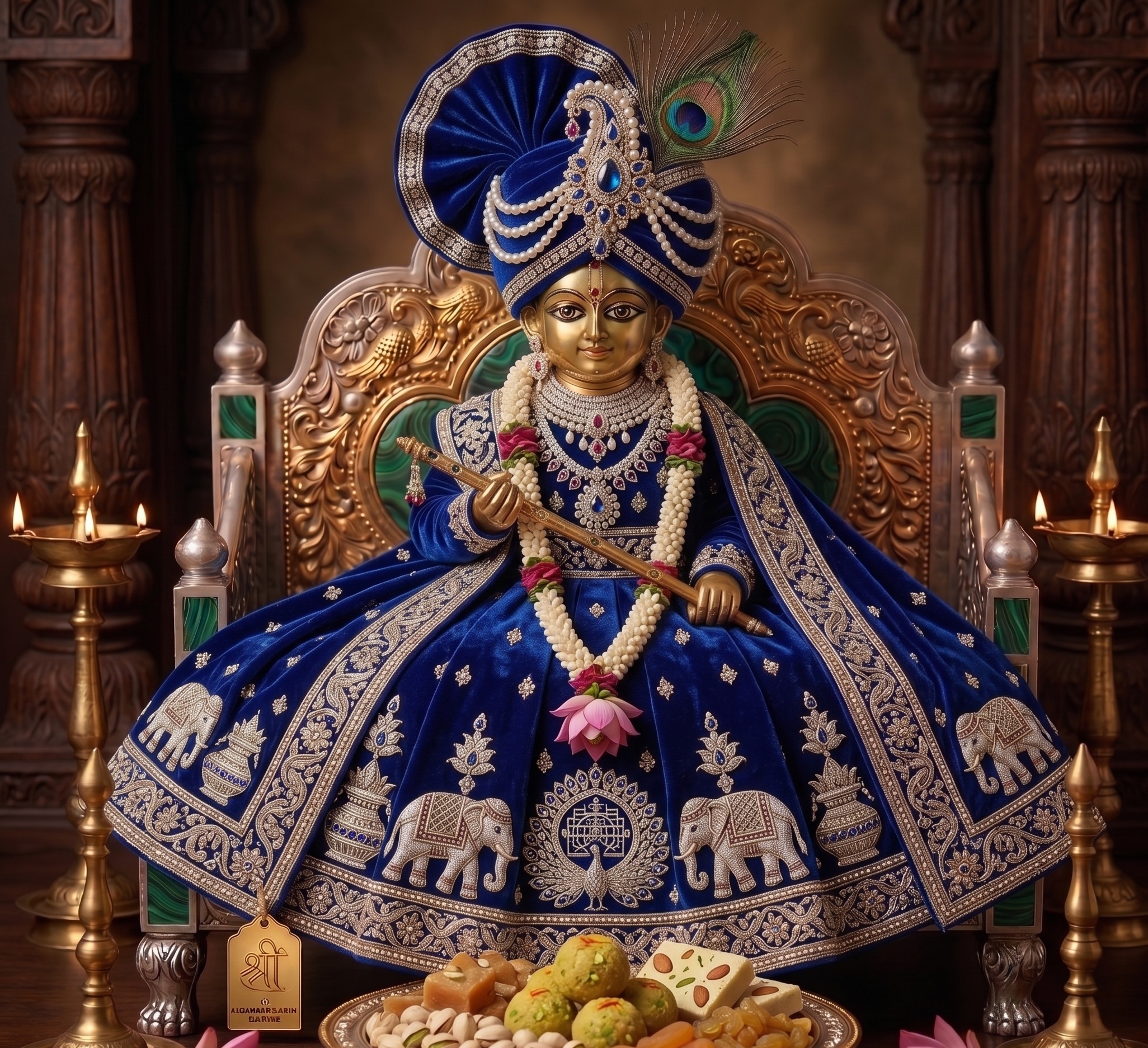
The Complete Janmashtami Poshak Guide for Laddu Gopal
What Makes a Janmashtami Laddu Gopal Dress Special
A Janmashtami dress for Laddu Gopal is not simply a more expensive version of a daily poshak. It is a different category altogether.
The key characteristics that define a genuine Janmashtami special poshak:
Fabric weight and richness. Janmashtami dress calls for fabric with presence,Banarasi silk, heavy georgette, or tissue silk. The weight of the fabric creates a drape and a quality of movement that lighter daily cotton cannot replicate.
Embroidery and handwork. A Janmashtami special heavy zari dress is the gold standard for this occasion. Real zari,silver or gold thread woven into the fabric,catches the diya and aarti light in a way that printed or machine-made embellishment does not. Handmade Kanha Ji poshak with original handwork elevates the entire shringar.
Completeness of the look. On Janmashtami, the poshak is part of a complete ensemble,mukut, haar, accessories, flowers. The dress should be chosen with the full look in mind, not in isolation.
Fit and drape. A Janmashtami poshak that fits correctly,not too tight, not sitting loosely on the idol,looks dramatically better than one that does not. For heavy poshak with dense embroidery, always go one size up from your standard measurement. For sizing guidance, our complete Laddu Gopal size chart covers every size with exact measurements.
Laddu Gopal Janmashtami Special Dress vs Daily Dress,What Is Actually Different
Many devotees ask this honestly: kya Janmashtami ke liye alag dress zaroori hai? This comparison answers it directly.
| Element | Daily Laddu Gopal Dress | Janmashtami Special Dress |
|---|---|---|
| Fabric | Soft cotton, malmal | Banarasi silk, heavy georgette |
| Embroidery | Simple border or minimal | Heavy zari, stone work, handwork |
| Occasion | Every day | Birthday, major festivals |
| Washing | Machine-safe, frequent | Dry clean or very gentle hand wash |
| Accessories | Minimal | Full mukut, haar, full set |
| Styling | Simple, quick | Deliberate, complete |
| Light effect | Soft, natural | Catches aarti and diya dramatically |
| Availability | Year-round | Sells out before festival |
| Emotion | Consistency, daily connection | Celebration, peak devotion |
A Laddu Gopal Janmashtami special dress is not just more expensive,it behaves differently, photographs differently, and creates a completely different atmosphere in the mandir. The combination of heavy fabric, real zari, and full shringar accessories on Janmashtami night is something that daily cotton simply cannot replicate.
Both have their place. Daily dress is devotion expressed through consistency. Janmashtami special dress is devotion expressed through celebration.
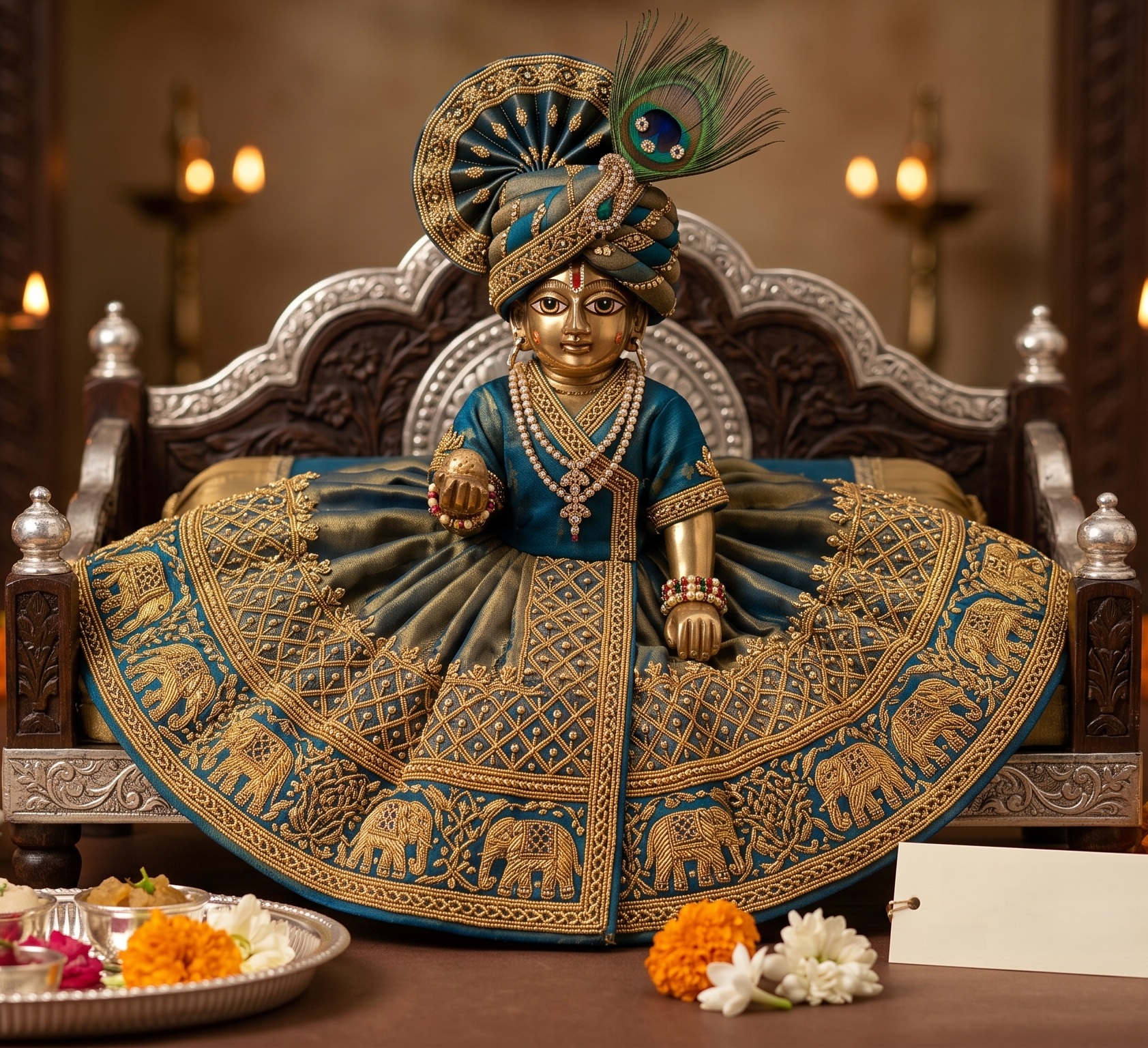
Types of Janmashtami Special Dress Available
The Laddu Gopal Janmashtami special dress category includes several distinct styles,each suitable for a different kind of devotee and a different kind of mandir setup.
Which Janmashtami Special Dress Is Most Popular for Laddu Gopal?
Before diving into individual options, here is what most devotees actually choose,and why.
Janmashtami special heavy zari dress is the most popular choice by a significant margin. The combination of real zari threadwork on a Banarasi or heavy silk base, available in yellow, blue, and gold, is the style most associated with Kanha Ji Janmashtami dress across North India. It is traditional, visually rich, and designed specifically for this occasion.
Handmade Kanha Ji poshak is the preferred choice for devotees who want something made exclusively,not mass-produced. These take longer to receive and cost more, but carry a quality that is immediately visible.
Banarasi silk with embroidery is the fabric most requested in premium Janmashtami poshak. When devotees describe the ideal Kanha Ji Janmashtami dress, Banarasi silk is what they are imagining,the weight, the sheen, the way the color holds.
Lehenga patka style is the traditional silhouette choice,structured, formal, and deeply rooted in poshak tradition. For devotees who want a Janmashtami special dress that looks like it belongs in a temple, lehenga patka is the answer.
Two additional styles worth knowing about:
Kanha Ji designer choli for Janmashtami,A contemporary, fashion-forward Janmashtami look for devotees who want richness with a slightly modern sensibility. Structured, detailed, and available in festival colors.
Heavy Laddu Gopal dress with stone and mirror work,Stone embellishment catches aarti and diya light in a way that zari alone does not. Particularly stunning during the midnight Nishita Puja when lamp light is the only source of illumination.
Colors for Janmashtami,What Is Traditional
Color is one of the most searched aspects of Janmashtami shringar,and for good reason. The right color on the right occasion carries its own meaning.
Yellow,Pitambar,The Most Sacred Choice
Yellow is Kanha Ji's own color. The word pitambar,peet (yellow) + ambar (cloth),is one of Krishna's own names and epithets. Dressing Laddu Gopal in yellow pitambar on Janmashtami is the most traditional and theologically resonant choice across all Vaishnava sampradayas.
A deep golden yellow or a rich saffron-gold in Banarasi silk for Janmashtami is as close to perfect as Janmashtami shringar gets.
Midnight Blue,The Color of the Divine Form
Shri Krishna's own skin is described as neela,the blue of a monsoon sky, the deep blue of the Yamuna at midnight. Dressing Laddu Gopal in midnight blue or deep peacock on Janmashtami is deeply meaningful,it mirrors the divine form itself.
Blue Janmashtami poshak with gold zari work creates one of the most stunning visual combinations in all of devotional shringar.
Gold and Ivory,For the Midnight Puja
Many devotees follow the tradition of a specific midnight poshak,a pure or ivory white dress with gold embroidery representing the purity and luminosity of the birth moment. Changing the poshak at 12:14 AM during Nishita Puja is a beautiful practice if you can maintain it.
What to Avoid on Janmashtami
Very dark, heavy colors without embellishment,plain dark maroon, dull navy,do not suit the celebratory quality of Janmashtami. Black is traditionally avoided for auspicious occasions in most Vaishnava traditions.
Fabric Guide,What to Choose for Janmashtami
| Fabric | Quality | Best For | Traditional Rating |
|---|---|---|---|
| Banarasi silk with original zari | Premium | Main Janmashtami poshak, midnight shringar | ⭐⭐⭐⭐⭐ |
| Heavy georgette with embroidery | Premium | Full embroidery look, warm season | ⭐⭐⭐⭐ |
| Tissue silk | Premium | Lightweight premium, summer Janmashtami | ⭐⭐⭐⭐ |
| Art silk with stone work | Mid-range | Vibrant festival look, value option | ⭐⭐⭐ |
| Cotton with border work | Daily only | Not appropriate for Janmashtami | ⭐ |
| Synthetic shimmer fabric | Avoid | Photographs poorly, fades quickly | ✗ |
The honest fabric truth: The difference between a Janmashtami poshak that looks extraordinary and one that looks ordinary is almost entirely the fabric. Banarasi silk with real zari is not just more expensive,it genuinely behaves differently. The way it catches light, the weight with which it drapes, the richness of the color,these qualities cannot be replicated by synthetic alternatives regardless of how good the photographs look.
If Janmashtami is the one occasion where you invest in a genuinely premium Laddu Gopal dress, this is it.
Sizes for Janmashtami,Important Notes
For daily poshak, your standard size works perfectly. For Kanha Ji Janmashtami dress in heavy fabric or handwork design, specific sizing considerations apply:
Go one size up for heavy poshak. Dense embroidery and zari work add structural rigidity to the fabric. A size 4 heavy poshak fits more snugly than a size 4 cotton poshak. If your idol measures size 4, order size 5 for a Janmashtami heavy dress.
Order early. Janmashtami poshak in sizes 3, 4, and 5 sells out consistently 3–4 weeks before the festival. Quality sellers with real handwork have limited inventory. Ordering well in advance is not overcautious,it is necessary.
For complete size reference, our Laddu Gopal size 0 to 10 complete guide covers every measurement in both inches and cm. For your daily rotation outside of Janmashtami, our daily shringar guide explains what fabrics work for each season.
The Complete Janmashtami Shringar Sequence
Janmashtami shringar is typically done in two stages,a daytime shringar for the celebrations and a special midnight poshak change for the Nishita Puja birth moment.
Daytime Shringar (Morning of September 4)
Begin the day with a full snaan (panchamrit bath),milk, curd, honey, ghee, and Gangajal or clean water. This is the beginning of Janmashtami seva.
Dress Kanha Ji in the main Janmashtami poshak. Take time with the arrangement,the embroidery should be centered on the front, the mukut placed straight, the accessories layered thoughtfully.
Decorate the mandir with fresh flowers,marigold, rose, and white jasmine are traditional. Fragrance matters on Janmashtami; incense and flowers together create the sensory atmosphere of a real celebration.
Pre-Midnight Preparation
Around 11:00 PM, prepare for the midnight puja.
If you are doing a separate midnight poshak,ivory or white for the birth moment,have it ready. Many devotees do a second snaan before the midnight puja: a gentle wipe with Gangajal or rose water.
Prepare the bhog for midnight,panchamrit, mishri, dry fruits, fresh milk. These are traditional Janmashtami bhog items.
Nishita Puja,12:14 AM to 1:01 AM (September 4 into September 5)
This is the most sacred hour of the year for Kanha Ji devotees.
At 12:14 AM, the birth moment begins.
If you are changing poshak for midnight: carefully remove the daytime dress and offer the midnight poshak. This change, done with full attention and intention during the Nishita window, is considered one of the most powerful acts of seva possible.
Perform the aarti. Offer the bhog. Sing or play Janmashtami bhajans,Nandalala, Govinda Bolo, whatever Kanha Ji's birthday songs feel right in your home.
After the aarti, distribute prasad.
Stay in the mandir after everyone has gone to sleep. Sit for a few minutes with Kanha Ji in the quiet of the night, the diya still burning, the flowers still fresh. This moment,the birthday midnight, the birthday child dressed in their finest, the house quiet around you,is the experience that Janmashtami is actually about.
Janmashtami Mandir Decoration Ideas
The poshak alone is not the full picture. The mandir decoration on Janmashtami is equally important,and equally searched. Whether you have a large dedicated puja room or a small shelf mandir in an apartment, Janmashtami decoration can be done beautifully at any scale.
For Large Mandirs and Dedicated Puja Rooms
Phool Bangla,The Traditional Flower Canopy The most traditional Janmashtami decoration is the Phool Bangla,a canopy of flowers built around and above the idol, creating a garden-like bower. In Vrindavan, entire temple mandirs are transformed into flower palaces for Janmashtami. At home, even a simplified Phool Bangla using fresh marigold strings, rose petals, and jasmine creates an atmosphere that is unmistakably festive and sacred.
To create a basic Phool Bangla at home: tie fresh flowers in strings and drape them across the top and sides of the mandir alcove. Layer the singhasan base with fresh petals. The fragrance alone transforms the entire room.
Full Fabric Draping On Janmashtami, many devout households drape the entire mandir shelf or alcove in fresh yellow or gold fabric,creating a visual frame for the Laddu Gopal Janmashtami special dress. The contrast of richly dressed Kanha Ji against a clean gold backdrop creates a visual that stays in the memory.
Multiple Diyas and Lamp Arrangement Arrange diyas symmetrically around the singhasan,five, seven, or eleven lamps in a traditional odd-number arrangement. When the midnight puja begins and all other lights are low, the diya flame catches the zari embroidery of the Janmashtami poshak in a way that is genuinely extraordinary.
For Small Mandirs and Apartment Shrines
Many devotees keep Laddu Gopal in a compact mandir setup,a single shelf, a small wooden mandir box, or a designated corner. Janmashtami decoration at this scale requires thoughtfulness rather than elaborateness.
The Single Statement Element For a small mandir, one strong decorative element works better than many competing ones. A fresh jasmine haar placed around the singhasan. A small flower canopy of just marigolds. A hand-embroidered backdrop cloth in yellow or gold behind the idol. Choose one thing and do it beautifully.
Fairy Lights or Small LED Diyas For apartment mandirs where multiple open-flame diyas are not practical, small LED diyas arranged around the mandir work beautifully. Warm white or golden tone,not blue or multicolor. Warm light works with the Janmashtami poshak colors; cool light fights them.
Flower Petals on the Shelf The simplest and most accessible decoration: fresh rose petals scattered on the mandir shelf around the idol. Combined with a fresh jasmine string and one fresh marigold, this costs almost nothing and looks genuinely beautiful. The fragrance is appropriate for the occasion.
Jhula Decoration,A Special Janmashtami Tradition
Placing Laddu Gopal in a decorated jhula (swing) on Janmashtami is one of the most beloved traditions,referencing the swinging of the baby Krishna in Gokul, celebrated in the Palna ceremony.
A small wooden or brass jhula, decorated with fresh flowers and a fabric swing seat in gold or yellow, becomes the visual focal point of the entire mandir on Janmashtami night.
If you have a jhula: decorate it with fresh marigolds, a small fabric canopy if possible, and place Kanha Ji in His Janmashtami special dress inside it. The combination of the special poshak and the decorated swing is one of the most photographed and most cherished Janmashtami setups in devout homes.
If you do not have a jhula: this is the occasion worth acquiring one. Even a simple small wooden swing for Laddu Gopal transforms the Janmashtami visual completely.
Photography Tips for Janmashtami
Since Janmashtami is the occasion most devotees photograph their Laddu Gopal, a few practical notes:
Natural morning light is the best light for Janmashtami darshan photography. After the morning snaan and first poshak change, photograph in the window light before the celebrations begin.
Midnight photography: Use diya light only if possible. Switch off overhead lights and photograph Kanha Ji in the Nishita Puja setup,the warm glow of diya flames on the Janmashtami special heavy zari dress creates photographs that are unforgettable.
Background matters: A clean, uncluttered background,a fabric backdrop, a fresh flower arrangement,makes your Laddu Gopal photograph look like a professional mandir photograph. The dress is the hero. Let it be the hero.
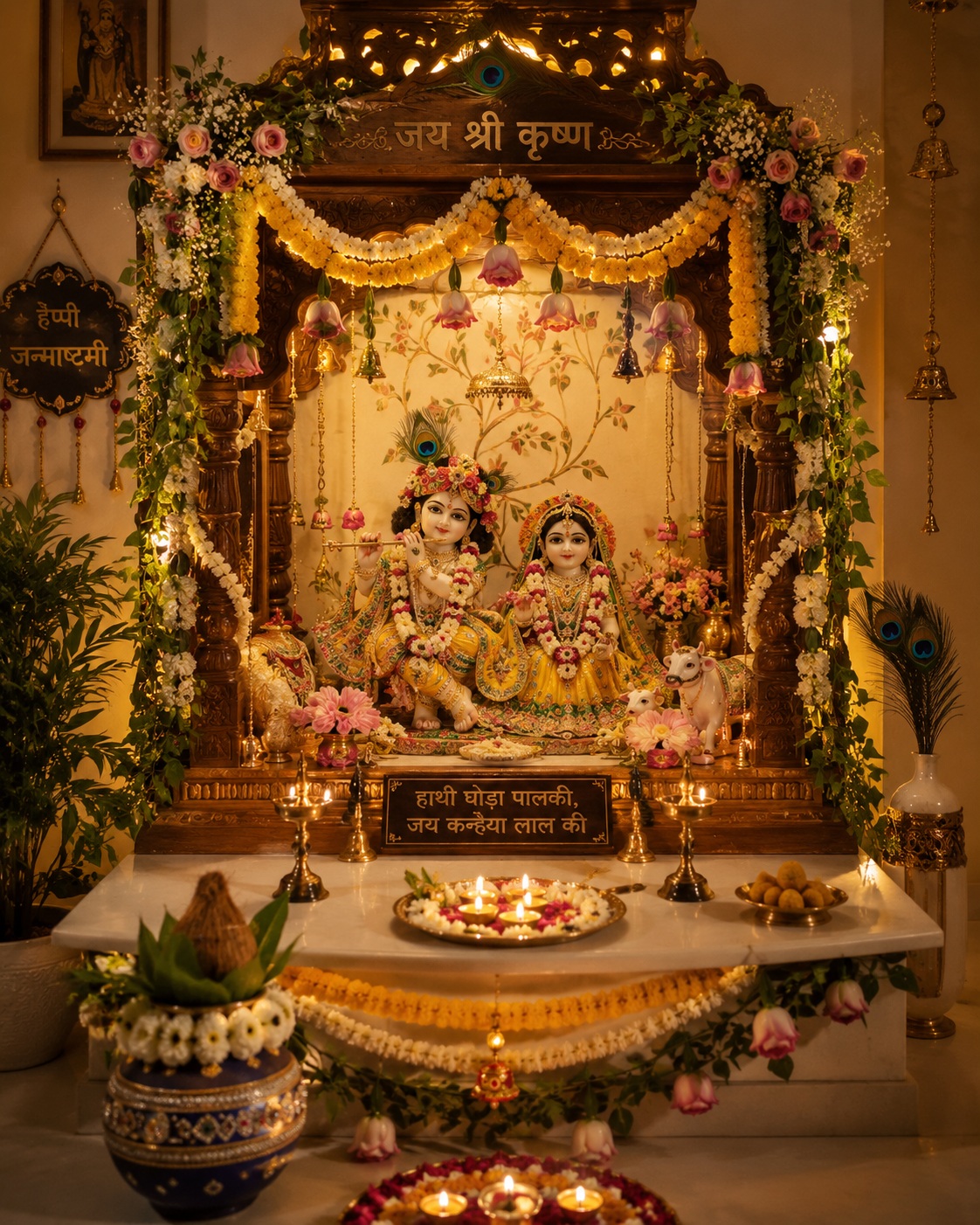
Janmashtami for Radha Rani and Yugal Jodi
For devotees who keep both Kanha Ji and Radha Rani,as a Kanhaji Darbar or Yugal Jodi setup,Janmashtami is the occasion for the most elaborate combined shringar of the year.
Coordinating the Yugal Jodi Janmashtami look:
Radha Rani's Janmashtami poshak should complement Kanha Ji's without being identical. If Kanha Ji wears deep yellow, Radha Rani looks magnificent in soft saffron or gold. If Kanha Ji wears midnight blue, Radha Rani in deep pink or coral creates a stunning pairing.
Radha Rani poshak for Janmashtami: Handcrafted Radha Rani lehenga in heavy fabric, Radha Rani heavy poshak in coordinated color, or the Traditional Radha Rani Chunri and Chandrika in a festive fabric. All three work beautifully for Janmashtami Yugal Jodi shringar.
Sizing for paired idols: Measure each idol separately. Radha Rani idols are typically slightly taller. For Radha Krishna poshak sets and Yugal Jodi dresses, both sizes are needed. For complete Yugal Jodi sizing guidance, see our Laddu Gopal poshak size chart guide.
When to Buy,The Janmashtami Poshak Timeline
This is the most practical section of this guide,and the one most devotees underestimate.
By 3–4 weeks before Janmashtami (latest): Order your Janmashtami poshak. Handmade Kanha Ji poshak and heavy embroidery pieces have limited production quantities. Size 3, 4, and 5 in premium Janmashtami dress sell out consistently well before the festival.
2–3 weeks before: If ordering in this window, choose from what is still available. Custom pieces are typically not possible this close to the festival.
1 week before: Last-minute options only. Quality premium poshak is largely sold out. You may find fast-delivery options but with limited selection.
Festival week: Prices increase, stock is minimal, delivery timelines are uncertain. The experience of last-minute Janmashtami poshak shopping is stressful and usually disappointing.
The practical rule: Janmashtami poshak is ordered weeks before, not days before.
Janmashtami Ke Liye Kanha Ji Ki Dress,A Note for Hindi-Speaking Devotees
Bahut devotees search karte hain: Janmashtami par Laddu Gopal ko kya pehnayen ya Kanha Ji ki Janmashtami poshak kaisi honi chahiye,toh yahan ek seedha jawab:
Janmashtami ke liye Laddu Gopal ki dress mein yeh hona chahiye:
- Fabric: Banarasi silk ya heavy embroidered fabric,synthetic se bachein
- Color: Peela (pitambar), midnight blue, ya gold,Kanha Ji ke apne rang
- Style: Laddu Gopal Janmashtami special dress,heavy poshak ya handmade Kanha Ji poshak with real zari
- Size: Apne idol ka size measure karein aur heavy poshak ke liye ek size upar order karein
- Time: August ke pehle hafte mein order karein,baad mein stock khatam ho jaata hai
Aur sabse important baat,jo poshak aap dedicate kehkar choosein, sincerity ke saath laayein, aur apne haathon se pehnayein,woh Kanha Ji ko sirf ek kapda nahi, ek offering hai.
Explore our Janmashtami Utsav Collection,handcrafted in Banarasi silk and heavy zari work by traditional karigars of Vrindavan and Mathura, designed specifically for this occasion. We ensure safe delivery across India and globally. Order before 2-3 weeks.
Related Guides
- Laddu Gopal Poshak Size Chart,Complete Measurement Guide
- Laddu Gopal Size 0 to 10,All Sizes with Inches and CM
- Daily Shringar of Laddu Gopal,Morning Seva Routine
- Kanha Ji Ke Kapde,Complete Guide
- How to Dress Laddu Gopal for Akshaya Tritiya 2026
Frequently Asked Questions
What is the best Janmashtami special dress for 4 number Laddu Gopal?
For a 4 number Laddu Gopal, the best Janmashtami dress is a heavy zari poshak or Banarasi silk dress in size 5,because for heavy festival poshak, always order one size up from your standard measurement. A Kanha Ji Janmashtami dress in deep yellow pitambar or midnight blue with gold zari work looks magnificent on a 4 number idol with a medium to large singhasan. Size 4 is the most popular size for Janmashtami poshak,order 3–4 weeks before the festival as this size sells out fastest.
Janmashtami 2026 kab hai?
Janmashtami 2026 Friday, September 4 ko hai. Nishita Puja,janm ka sabse sacred samay,12:14 AM se 1:01 AM ke beech hai (September 4 ki raat se September 5 ki subah). Dahi Handi September 5 ko manaya jaayega.
Janmashtami ke liye best Laddu Gopal dress kaun si hai?
Janmashtami ke liye Banarasi silk ya heavy embroidered fabric mein poshak sabse appropriate hai. Janmashtami special heavy zari dress yellow (pitambar), midnight blue, ya gold mein sab se zyada follow ki jaane wali choice hai. Handmade Kanha Ji poshak with real handwork is occasion ka sabse premium option hai.
Which color is best for Laddu Gopal on Janmashtami?
Yellow (pitambar) is the most traditional and theologically significant color for Kanha Ji on Janmashtami,pitambar is one of Krishna's own epithets. Midnight blue with gold zari is the most visually stunning option. Ivory or white with gold embroidery is traditionally used for the midnight Nishita Puja moment.
When should I order Janmashtami poshak for Laddu Gopal?
Order by the first week of August at the latest. Premium Janmashtami poshak in sizes 3, 4, and 5 consistently sells out by mid-August. Handmade and custom pieces require even more lead time. Ordering in September leaves you with limited options and uncertain delivery timelines.
What size poshak for Janmashtami heavy dress?
For a Janmashtami heavy poshak or handmade embroidery dress, always order one size up from your standard measurement. Heavy fabric and dense zari work have more structural rigidity than daily poshak,a size 4 heavy dress fits like a size 3 daily cotton poshak. Standard size for daily use, plus one for heavy festival poshak.
Can I dress Laddu Gopal twice on Janmashtami,once for day and once for midnight?
Yes,this is a beautiful tradition practiced by many devoted households. A daytime Janmashtami poshak in the main festival color (yellow or blue), followed by a pure white or ivory poshak changed at the Nishita Puja midnight moment (12:14 AM). The midnight poshak change during the birth moment is considered an especially powerful act of seva.
What is the correct shringar sequence for Janmashtami?
Begin with panchamrit snaan in the morning. Dress in the main Janmashtami poshak, place the mukut, add accessories and fresh flowers. At midnight (12:14 AM during Nishita Puja), optionally change to a special midnight poshak. Perform aarti, offer bhog, sing Janmashtami bhajans. The complete sequence is covered in detail in the shringar section of this guide.
Laddu Gopal Janmashtami decoration kaise karein?
Fresh flowers (marigold and jasmine), multiple diyas arranged symmetrically, a colored fabric backdrop behind the singhasan, and optionally a Phool Bangla (flower canopy) over the idol. Many devotees also place Kanha Ji in a decorated jhula (swing) on Janmashtami. Rangoli at the mandir entrance completes the celebration setup.
Radha Rani aur Kanha Ji ka Janmashtami Yugal Jodi poshak kaise coordinate karein?
Complementary colors work best,Radha Rani in soft saffron if Kanha Ji wears deep yellow, or Radha Rani in deep pink if Kanha Ji wears midnight blue. Both should be in heavy fabric for Janmashtami. Handcrafted Radha Rani lehenga or Radha Rani heavy poshak paired with Kanha Ji's Janmashtami dress creates the most complete Yugal Jodi shringar of the year.
Janmashtami poshak online kahan se milega?
Premium Janmashtami Laddu Gopal dress online is available from quality brands like Divyambar,handcrafted, precisely sized, and specifically designed for this occasion. We ship across India (including Vrindavan, Mathura, Delhi, Mumbai) and offer worldwide delivery to devotees globally. When ordering online, check fabric description carefully, verify size using the measurement guide, confirm delivery timeline well before the festival, and order by August 10 to avoid stockouts.