Janmashtami Special Dress for Laddu Gopal - Heavy Zari, Handmade & Designer Poshak Ideas
A complete guide to Janmashtami special dress types for Laddu Gopal, what heavy zari actually means, how handmade Kanha Ji poshak differs from machine-made, and which designer poshak ideas work best for this occasion.
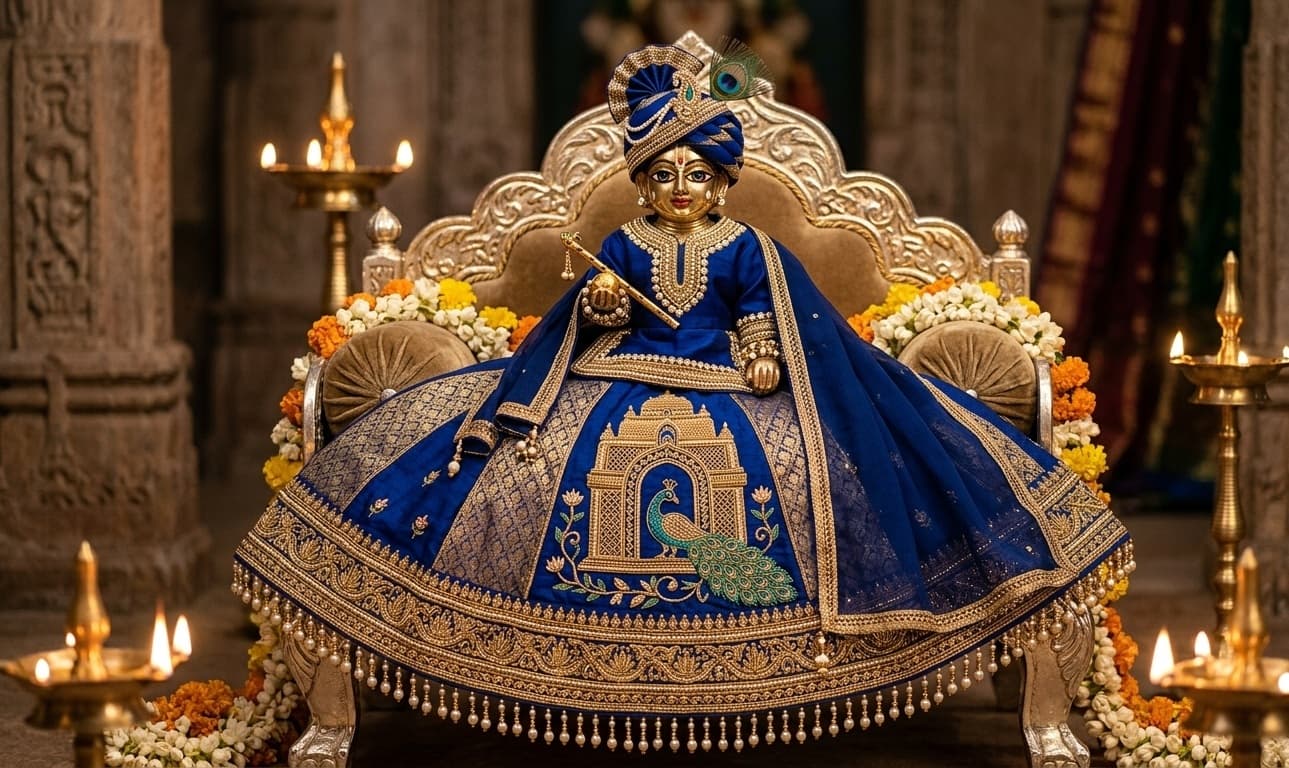 Janmashtami Special Dress for Laddu Gopal - Heavy Zari, Handmade & Designer Poshak Ideas
Every Janmashtami, devotees scroll through page after page of "heavy zari," "designer," and "handmade" Laddu Gopal dress listings. Almost every product uses the same words. Very few explain what those words actually mean.
This creates a real problem. A devotee who wants genuine handwork receives machine embroidery with a few hand-finished edges. Someone who ordered a "heavy zari Janmashtami poshak" receives a piece where the "zari" is a printed metallic surface rather than real metallic thread. And a "designer Kanha Ji dress" turns out to be the same silhouette sold everywhere, dressed up with slightly different colors.
The words are used, but the substance behind them is missing.
This guide fixes that. It explains what each category actually means when done correctly, what real heavy zari looks like, what genuine handwork involves, and what makes a Kanha Ji designer dress worthy of the name, so that when you choose a Janmashtami special dress, you know exactly what you are choosing and why.
This guide is informed by direct experience working with karigar families in Vrindavan who specialize in deity poshak for festival occasions. Last updated August 2026.
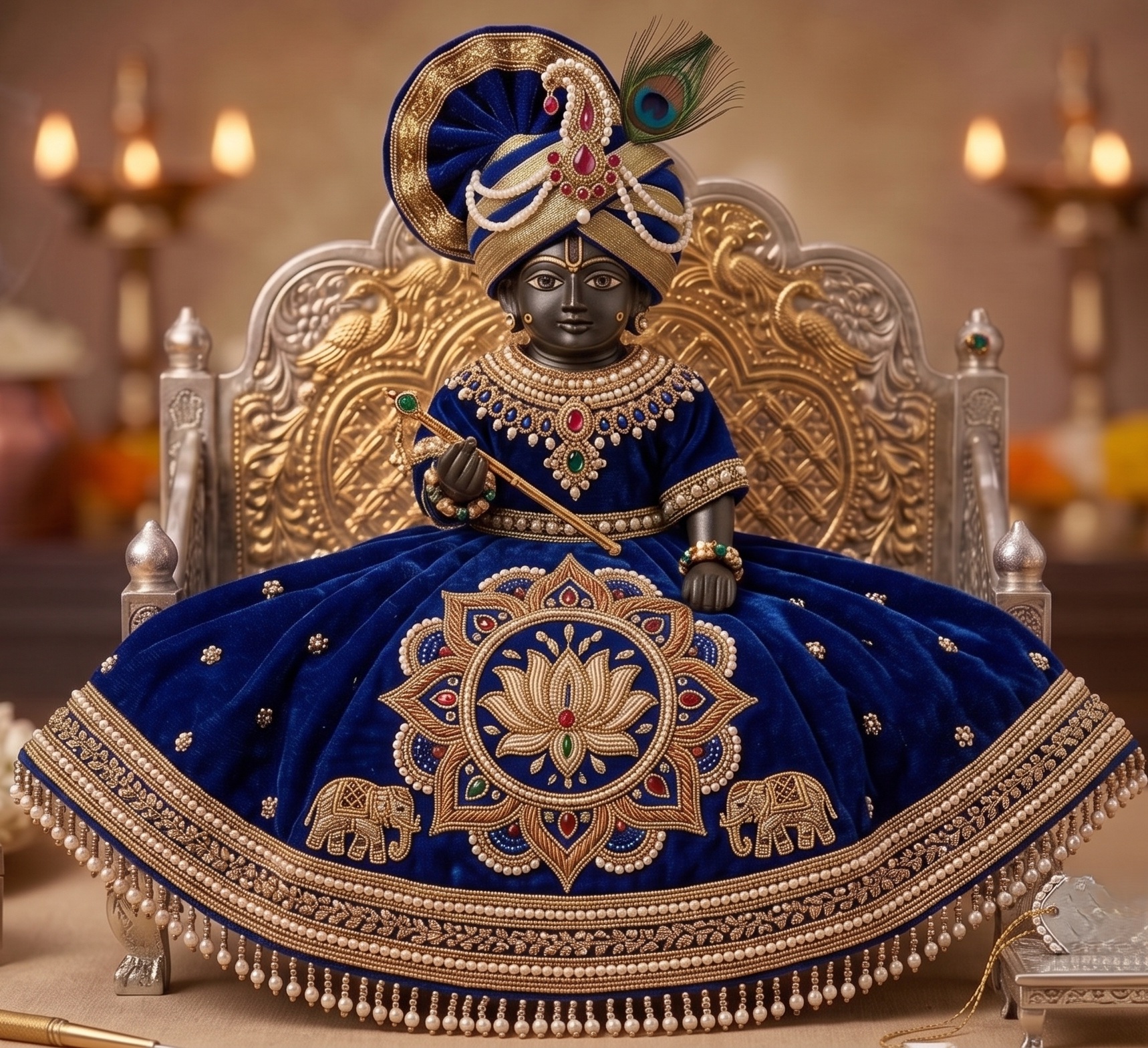
What is a Janmashtami special dress for Laddu Gopal? A Janmashtami special dress is a poshak specifically created for Kanha Ji's birthday,typically more elaborate than daily wear, with heavier fabric, richer embellishment, and greater attention to detail. The three main categories are heavy zari poshak (dense metallic threadwork), handmade Kanha Ji poshak (embroidery done by skilled artisans by hand), and designer poshak (contemporary silhouettes with premium detailing). Each is genuinely different in production, appearance, and occasion appropriateness.
Quick Reference,Janmashtami Special Dress Categories
- Heavy Zari: Metallic thread woven into fabric,catches diya light, heavier weight, festival-grade
- Handmade/Handwork: Human-embroidered, individual character, cannot be mass-produced
- Designer: Contemporary styling, structured silhouette, fashion-forward for Krishna devotees
- All three: Best suited for sizes 3 and above,see size guide
- Order timing: At least 3–4 weeks before Janmashtami
Heavy Zari Poshak,What It Actually Means
Heavy zari is the most searched and most misunderstood category in Janmashtami dress for Laddu Gopal.
Zari itself refers to metallic thread,traditionally spun from fine wire wound around a core fiber,used to create embroidered or woven patterns on fabric. When a poshak is described as having "heavy zari work," it should mean that a substantial quantity of real metallic thread has been used in the embroidery, creating a weighty, visually dense pattern with a genuine metallic sheen.
What it should not mean,and what buyers frequently encounter,is printed metallic designs on fabric, or very light zari borders described as "heavy" for marketing purposes.
If every listing claims to be "heavy," the better question is not whether the seller uses the word,it is what they are actually describing when they do.
How to Identify Genuine Heavy Zari
Weight: A genuinely heavy zari Janmashtami poshak has a noticeable weight to it. When you hold it, you feel the density of the thread. A synthetic-embellished piece that photographs similarly will feel light and hollow by comparison.
Light behavior: Real zari catches light differently at different angles,this is visible in photographs taken in natural light or diya light. The pattern seems to shift slightly as the light source moves. Printed metallic does not do this.
Thread texture: Under close inspection, real metallic zari threadwork has a raised, textured quality,the thread sits above the fabric surface. Printed or machine-embossed "zari" sits flat and often has a slightly plastic quality.
For a Janmashtami special heavy zari dress, the base fabric matters equally. The most traditional and most appropriate foundation is Banarasi silk,the weight and sheen of the silk base allows the zari work to sit and drape correctly. Heavy zari on a lightweight synthetic base tends to pull and distort. This is why experienced devotees often judge a festival poshak by the combination of fabric, embroidery, and finishing,not by shine alone.
For guidance on which heavy zari poshak is appropriate for your specific idol size, our Janmashtami dress by size guide covers this in detail,including why heavy poshak sizing usually requires going one size up from your standard measurement.
Handmade Kanha Ji Poshak,What Real Handwork Means
The phrase "handmade" is used so broadly in the deity clothing market that it has almost lost meaning. A piece where a karigar hand-finished the edges after machine embroidery is technically "handmade",but it is not what most devotees are looking for when they search for a handmade Kanha Ji poshak or handwork dress.
Genuine handwork in deity poshak means the embroidery itself,the pattern, the fill, the detailing,was created stitch by stitch by a skilled artisan. No machine guided the needle. No programmed pattern determined the spacing. Every element reflects the judgment, skill, and attention of the person creating it.
This matters in ways that are visible to anyone who has held both a machine-embroidered and a hand-embroidered poshak side by side.
The Visible Difference
Slight natural variation: Machine embroidery is perfectly uniform,every repeat is identical. Hand embroidery has a subtle, human variation in spacing and fill density that gives it a warmth and individuality impossible to replicate mechanically. This is not a flaw; it is the mark.
Depth and dimension: Hand stitching creates layers of thread that build up differently at different points in a pattern, giving genuine embroidery a three-dimensional quality that machine work does not achieve. In the light of a Janmashtami diya, this depth is especially visible.
Character over time: Machine embroidery tends to flatten and distort after washing. Hand embroidery, when cared for correctly, maintains its character and density for years.
A genuine handmade Kanha Ji poshak or handwork dress is not the cheapest option in its category,it should not be. Skilled karigar families in Vrindavan spend days on a single piece. Understanding what you are paying for when you invest in real handwork is part of knowing what to look for.
Kanha Ji Designer Poshak,What Elevates It Beyond Standard
The designer category in Laddu Gopal dress has become one of the fastest-growing search intents,and for good reason. A growing segment of devotees want a Janmashtami poshak that is not simply traditional but genuinely beautiful in a contemporary design sense.
But there is an important distinction worth making: a designer poshak is not about making Kanha Ji fashionable. It is about expressing timeless devotional aesthetics through better colour balance, embroidery placement, proportion, and craftsmanship. The goal is not trend,it is elevated devotion through considered design.
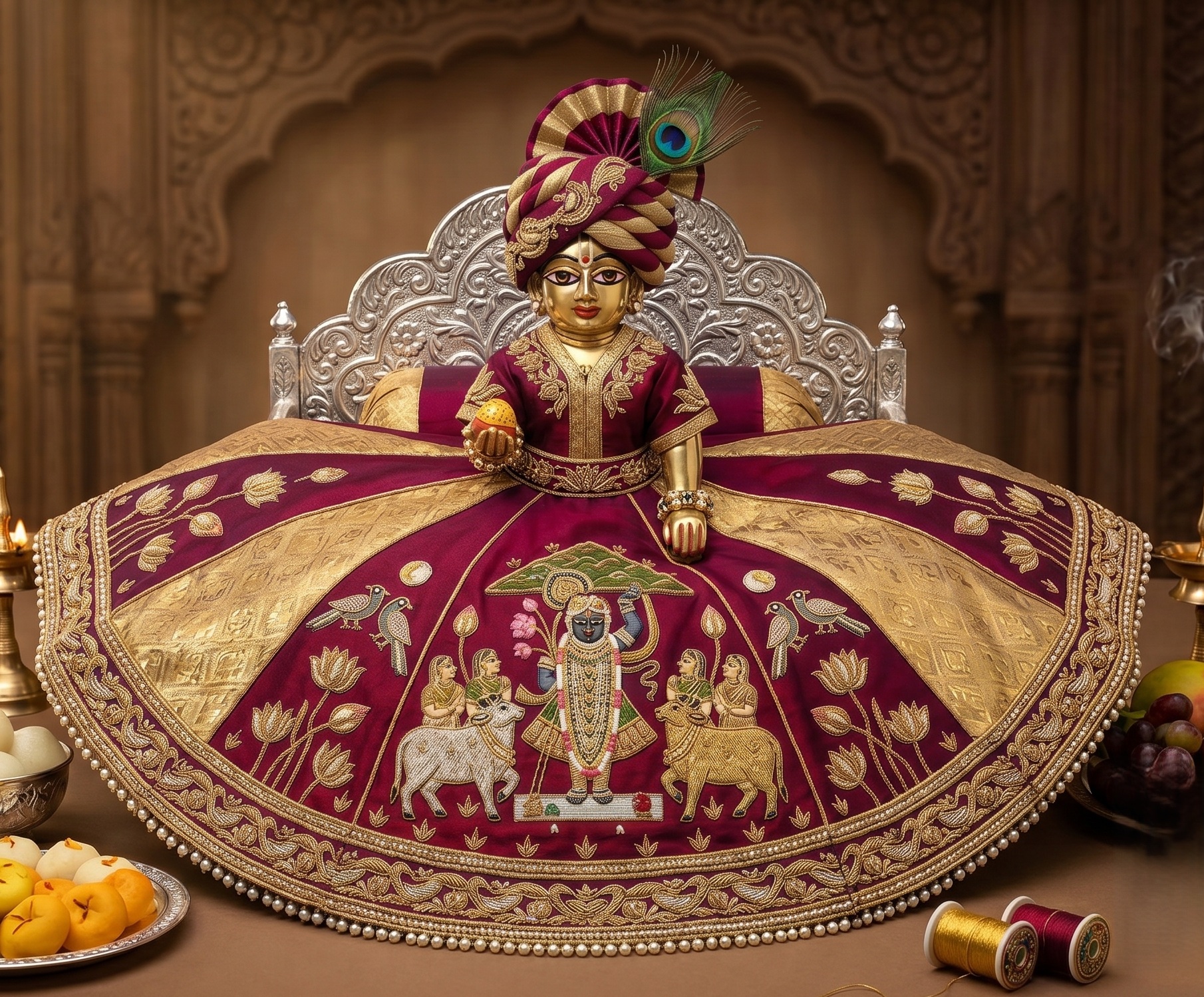
A Kanha Ji designer choli or designer poshak, when the term is used correctly, means a piece where the design itself,not just the fabric or embellishment,has been thoughtfully created. The silhouette is intentional. The color palette is considered. The placement of embroidery elements has been planned rather than simply applied.
What Makes a Designer Poshak Worth the Name
Silhouette: Most standard Janmashtami poshak follows the same cone or lehenga-patka silhouette that has existed for decades. A genuine designer piece may introduce a shaped front panel, a structured collar detail, a distinctly placed embroidery layout,elements that make the poshak recognizable as a design object rather than a category product.
Color innovation: Standard Janmashtami poshak is predominantly yellow, blue, or red. A designer Kanha Ji dress may work with unexpected combinations,ivory and sage, peacock and rose gold, deep burgundy with antique gold,that feel contemporary while remaining devotionally appropriate.
Embellishment placement: On a well-designed piece, the embellishment is not simply covering the maximum possible surface area. It is placed to create a focal point, to draw attention to specific elements of the poshak as it sits on the idol. This kind of considered placement is what separates design from decoration.
Heavy Zari vs Handmade vs Designer,Which Should You Choose?
| If you want | Choose |
|---|---|
| Traditional festival look that catches aarti light | Heavy Zari Poshak |
| A unique piece with artisan character | Handmade Kanha Ji Poshak |
| Contemporary elegance with considered design | Designer Poshak |
| The highest devotional investment | Handmade + Heavy Zari combined |
| A reliable, widely available first choice | Heavy Zari Lehenga Patka |
All three are appropriate for Janmashtami when made with carefully selected fabric and genuine craftsmanship. The distinction is in what matters most to you,tradition, artisanship, or aesthetic innovation.
The finest Janmashtami poshak often combines all three,a thoughtfully designed silhouette, genuine hand embroidery, and rich zari work,rather than fitting neatly into a single category. These are not competing qualities. They are layers of the same intention.
Common Mistakes When Buying a Heavy Janmashtami Poshak
- Choosing based on photographs alone without reading fabric descriptions
- Ignoring the base fabric,zari work on synthetic base pulls and loses shape
- Assuming "handmade" always means hand embroidery,it often means hand-finished edges only
- Ordering standard size for heavy zari poshak,always go one size up for heavy festival dress
- Ordering too close to Janmashtami,popular sizes in quality collections sell out 3–4 weeks before the festival
Yugal Jodi and Kanhaji Darbar,Festival Poshak for Both Radha Rani and Kanha Ji
For devotees keeping a Kanhaji Darbar or Yugal Jodi setup, Janmashtami is also the occasion for Radha Rani's finest shringar.
Radha Rani heavy poshak for Janmashtami should be chosen in coordination with Kanha Ji's dress,complementary in color and consistent in quality level. If Kanha Ji's Janmashtami poshak is a genuine handmade heavy zari piece, Radha Rani's should match that quality standard.
A handcrafted Radha Rani lehenga in complementary color,soft saffron alongside Kanha Ji's deep yellow, or rose gold alongside midnight blue,creates the most harmonious Yugal Jodi presentation. The Traditional Radha Rani Chunri and Chandrika in a heavy fabric works beautifully if a full lehenga feels too elaborate.
For Radha Rani, Janmashtami is also a moment to consider the Radha Rani white and golden poshak,historically associated with the Sharad Poornima occasion but deeply beautiful for any celebration of their union.
For complete Radha Rani and Yugal Jodi Janmashtami shringar guidance, our complete Janmashtami guide covers coordination in detail.
Current Janmashtami Dress Trends (2026),What Is Actually Popular
Based on what karigars in Vrindavan are producing and what devotees are genuinely searching for in 2026, these are the poshak directions that are most requested this Janmashtami season:
Stone-work poshak with muted base colors. Moving away from very bright synthetic colors, devotees are increasingly requesting poshak on cream, ivory, and dusty rose bases with heavy stone and kundan work. These photograph beautifully in natural light and feel more refined than high-saturation synthetic fabrics.
Pitambar-style handwork dress. The traditional yellow pitambar,Kanha Ji's own color,in genuinely hand-embroidered form is seeing renewed interest among devotees who want something rooted in tradition rather than trend.
Lehenga patka style in Banarasi or fine georgette. The structured, two-panel lehenga patka silhouette in Banarasi or heavy georgette remains the most requested format for serious Janmashtami poshak,reliable, beautiful, and deeply traditional.
Matching Yugal Jodi sets. Coordinated Radha Krishna poshak sets,both pieces designed together,are one of the fastest-growing request categories among devotees with a complete Darbar setup.
Every Janmashtami comes only once a year. The memories created that night,the midnight aarti, the diya light catching the zari embroidery, the darshan of Kanha Ji in His birthday dress,remain for years. The poshak you choose becomes part of those memories, which is why understanding craftsmanship matters just as much as choosing the right colour or size.
At Divyambar, a Janmashtami poshak is never just another festive garment. It becomes part of a family's seva, darshan, and celebrations. That responsibility influences every design decision,from fabric sourcing and embroidery planning to color testing and final sampling.
Our Janmashtami collection focuses on heavy zari Banarasi poshak, genuinely handmade pieces with original handwork, and thoughtfully designed festival dress for Kanha Ji. Every piece in our Laddu Gopal dress collection is built around what this occasion actually deserves.
Related Guides
- Janmashtami Laddu Gopal Dress 2026,Complete Guide
- Laddu Gopal Dress for Janmashtami by Size 0 to 10
- Janmashtami Shringar,Complete Mukut, Jewellery & Poshak Guide
- Laddu Gopal Poshak Size Chart,Complete Measurement Guide
Frequently Asked Questions
What is the difference between heavy zari and regular zari poshak for Laddu Gopal?
Heavy zari poshak uses a significantly larger quantity of metallic thread, creating dense patterns with noticeable weight and a genuine metallic sheen that catches light during aarti and diya illumination. Regular or light zari uses thinner borders or sparser threadwork. For Janmashtami specifically, heavy zari on a Banarasi silk base is the most traditional and most visually appropriate choice.
How can I tell if a Kanha Ji poshak is genuinely handmade?
Genuine handmade poshak has slight natural variation in embroidery spacing and fill,no two sections are perfectly identical. It has dimensional depth in the embroidery that machine work cannot replicate. It also typically costs significantly more than machine-embroidered alternatives, and honest sellers will describe the handwork in specific terms (hand-embroidered, karigar-made) rather than vague ones.
What is a Kanha Ji designer choli and when is it appropriate?
A Kanha Ji designer choli refers to a deity dress with a contemporary, fashion-informed design sensibility,intentional silhouette, considered color palette, and thoughtful embellishment placement. It is appropriate for Janmashtami and major festival occasions when devotees want a poshak that is both devotionally appropriate and aesthetically distinctive.
Which Janmashtami special dress is most popular for 4 number Laddu Gopal?
For a 4 number Laddu Gopal, the most popular Janmashtami poshak is a heavy zari lehenga patka in yellow pitambar or midnight blue on a Banarasi or heavy georgette base. For heavy festival poshak specifically, ordering size 5 for a 4 number idol gives the most graceful drape, since heavy fabric fits more snugly than daily cotton.
What should I look for when buying Janmashtami poshak online?
Look for specific fabric descriptions (Banarasi silk, heavy georgette,not just "silk-like"), clear indication of whether embroidery is hand or machine done, accurate size guidance, visible details showing thread quality and embellishment placement, and a seller who provides exchange options for sizing issues. Order at least 3–4 weeks before Janmashtami,quality poshak in popular sizes sells out well before the festival.
Is a designer Kanha Ji poshak appropriate for Janmashtami?
Yes,when a designer poshak is made from appropriate festival fabric (heavy silk, Banarasi, rich georgette) and maintains the devotional character of the shringar, it is entirely appropriate for Janmashtami. A well-designed piece that honors the occasion through quality and intention carries as much devotional weight as a traditional one.
Janmashtami ke liye kaunsa poshak sabse achha hota hai,heavy zari, handmade ya designer?
Teeno categories mein se best choice aapke idol size, budget, aur preference par depend karti hai. Heavy zari poshak Janmashtami ki raat mein diya aur aarti mein sabse zyada chamakta hai,traditional aur widely chosen. Handmade Kanha Ji poshak woh devotees choose karte hain jo genuinely unique, artisan-created piece chahte hain. Designer poshak un logon ke liye hai jo traditional devotion ke saath contemporary aesthetics chahte hain. Teen mein se koi bhi,agar quality achhi ho aur fabric festival ke layak ho,Kanha Ji ke janmadin ke liye perfectly appropriate hai.