Radha Ashtami Dress for Radha Rani Ji — How to Choose the Right Poshak for Her Appearance Day
A complete guide to choosing the right Radha Rani Ji poshak for Radha Ashtami — handcrafted Radha Rani lehenga, heavy poshak, Chunri Chandrika, colours, fabrics, sizing, and what to look for when buying online for September 19, 2026.
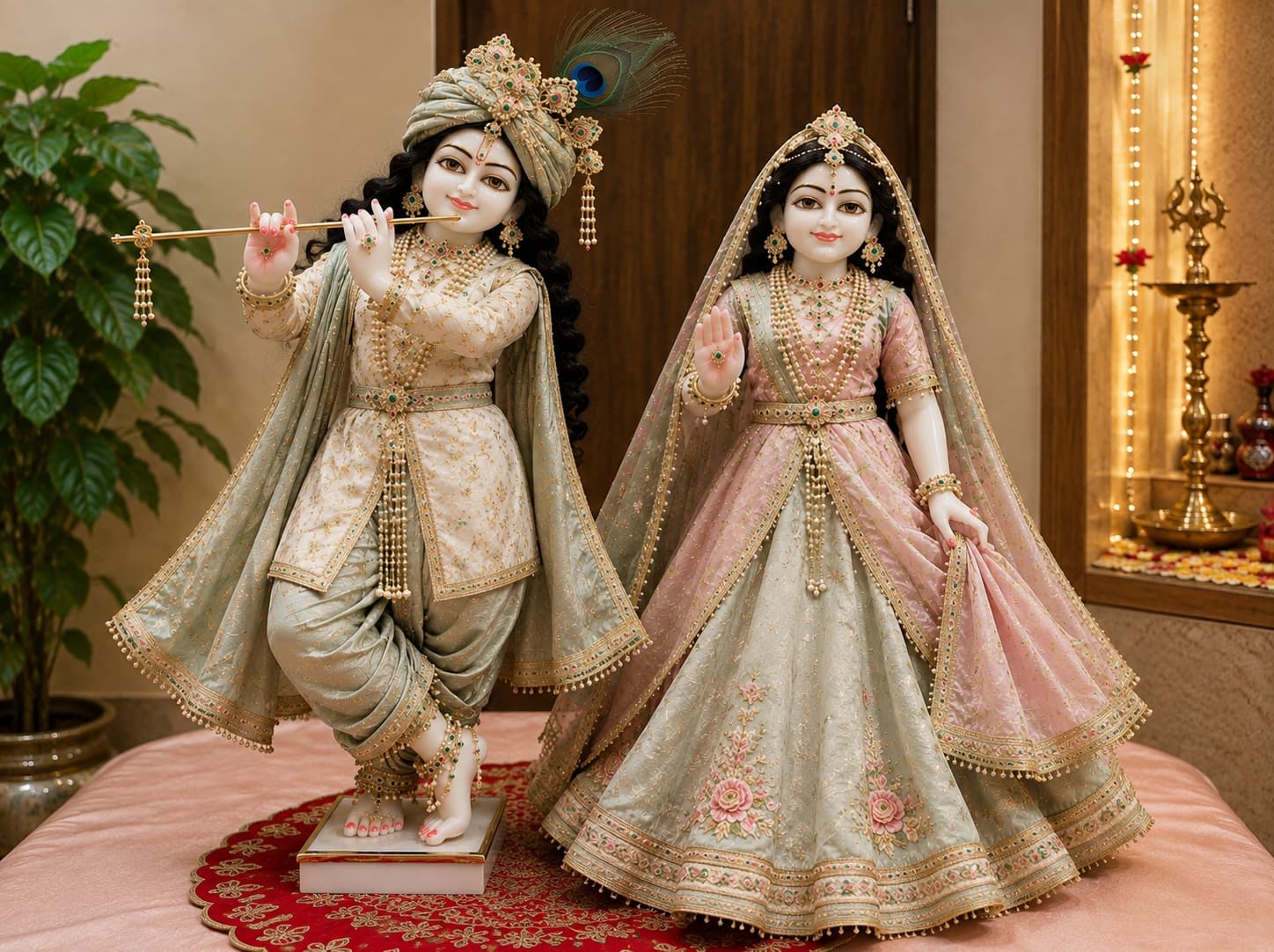 Radha Ashtami Dress for Radha Rani Ji — How to Choose the Right Poshak for Her Appearance Day
Most devotees who keep Radha Rani Ji in their home mandir, as part of a Yugal Jodi, a Kanhaji Darbar, or as the central presence in their seva, have a clear sense of what Kanha Ji wears on Janmashtami.
The same clarity about Radha Rani Ji's poshak on Radha Ashtami is sometimes harder to find.
Radha Ashtami, Her appearance day, falling on September 19, 2026, is a day when Radha Rani Ji is the focus of the celebration. For many devotees, that naturally changes the way Her shringar is approached.
The first question is no longer, "What will match Kanha Ji?"
It becomes, "What poshak feels right for Radha Rani Ji on Her day?"
This guide is specifically about that choice: the different types of Radha Rani poshak, colours and fabrics that work well for September, how to measure Her correctly, what to check when buying online, and how to coordinate Kanha Ji's dress afterward.
This guide draws from Radha Rani Ji shringar traditions observed in Barsana and devotional styling associated with Vrindavan and Mathura. Individual seva traditions may differ. Last updated September 2026.
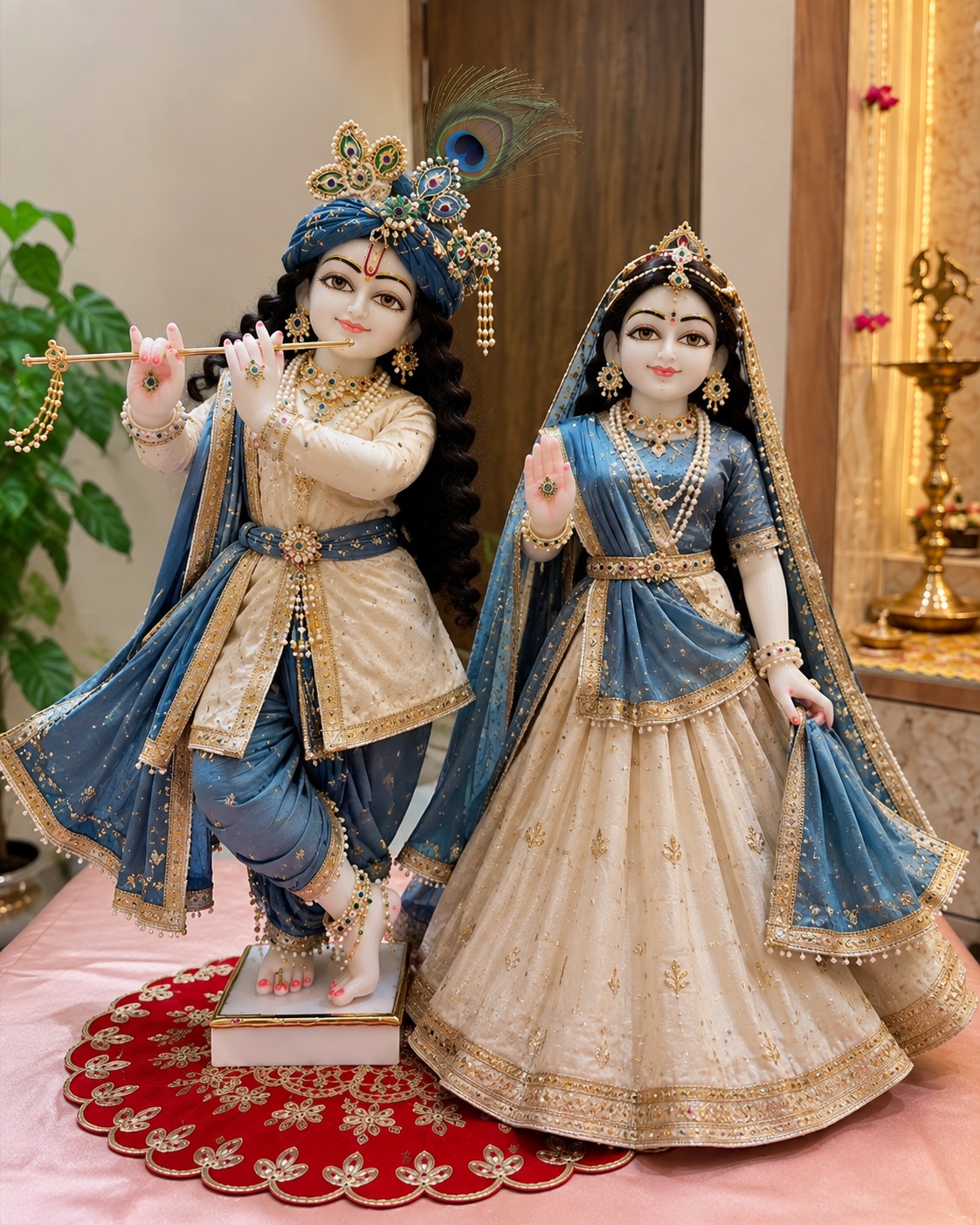
Quick Answer: What Is the Right Radha Ashtami Dress for Radha Rani Ji?
The right Radha Ashtami dress for Radha Rani Ji is one chosen specifically for the significance of Her appearance day. Many devotees prefer a handcrafted Radha Rani lehenga or a richly embellished Radha Rani heavy poshak in colours such as deep rose pink, pale gold, ivory, or saffron.
There is no single colour or style that every devotee must choose. The better approach is to consider the quality of the fabric, the embroidery, the fit, the overall proportion, and the style of shringar followed in your mandir.
The goal is not simply to choose the richest-looking dress. It is to choose a poshak that looks intentional and feels worthy of the seva being offered.
The right Radha Ashtami poshak isn't the most elaborate one. It's the one chosen with the most thought.
Quick Reference, Radha Rani Ji Poshak for Radha Ashtami
- Date: September 19, 2026
- Commonly chosen styles: Handcrafted Radha Rani lehenga or Radha Rani heavy poshak
- Colours used in devotional styling: Deep rose pink, pale gold, ivory, saffron
- Fabric options: Banarasi silk, heavy silk, heavy georgette, art silk with quality embellishment
- For September: Rich silk and georgette can offer visual richness without the thickness of winter fabrics
- Sizing: Measure Radha Rani Ji separately from Kanha Ji; do not assume both figures need the same size
- For handcrafted pieces: Allow a reasonable lead time for making, finishing, and delivery
Table of Contents
- Why Radha Rani Ji's Radha Ashtami Dress Is a Different Decision
- Types of Radha Rani Ji Poshak
- Colours for Radha Rani Ji on Radha Ashtami
- Choosing the Right Fabric for September
- Sizing Radha Rani Ji's Poshak Correctly
- What to Look for When Buying Radha Rani Ji Poshak Online
- How Radha Rani Ji's Poshak Relates to Kanha Ji's
- A Simple Radha Ashtami Poshak Checklist
- Frequently Asked Questions
Why Radha Rani Ji's Radha Ashtami Dress Is a Different Decision
In everyday shringar, Radha Rani Ji's poshak is often considered alongside Kanha Ji's. Colours may be coordinated, fabrics may be kept at a similar visual weight, and the two figures may be dressed as one Yugal Jodi.
On Radha Ashtami, many devotees consciously reverse that order.
Radha Rani Ji's poshak becomes the starting point. Kanha Ji's can then be selected to complement Her.
This small change in the order of choosing can make the whole preparation feel different. Instead of finding something for Kanha Ji and then trying to make Radha Rani Ji's dress fit around it, the devotee begins with Radha Rani Ji, Her appearance day, Her proportions, Her colours, and the style of shringar being offered.
That is particularly meaningful for a Yugal Jodi or Kanhaji Darbar, where both figures will eventually be seen together.
Divyambar's Seva Insight
Choosing Radha Rani Ji's poshak first is a simple change, but it changes the intention behind the entire selection. The two poshaks stop looking like separate purchases and start looking like one considered darshan.
For the complete Yugal Jodi preparation, including Kanha Ji's coordination, shringar sequence, and flower selection, see our Radha Ashtami Yugal Jodi shringar guide.
The Types of Radha Rani Ji Poshak, What Each Offers
There are several styles of Radha Rani Ji poshak that can work beautifully for Radha Ashtami. The right choice depends on the kind of darshan you want to create and the size and proportions of your Radha Rani Ji.
Handcrafted Radha Rani Lehenga
A handcrafted Radha Rani lehenga is a structured, detailed option for devotees who want visible artisan work in the poshak.
A good handcrafted piece may use silk, Banarasi, or another substantial fabric with hand embroidery, zari, beads, stones, or other decorative work. The appeal is not simply that the garment is "heavy." It is the character created by the handwork itself.
When examining embroidery, look closely at the stitching. Handwork can show small variations in spacing, thread tension, and fill. Those variations are not necessarily flaws; they can be part of what makes an individually worked piece feel different from a mass-produced one.
Best for: A special Radha Ashtami offering, devotees who value visible handwork, and larger figures where a structured garment can be presented properly.
Look for: Clearly described hand embroidery, a well-finished hem, secure embellishment, and a fabric with enough body to support the design.
Radha Rani Heavy Poshak
A Radha Rani heavy poshak offers a richly embellished look without the structured construction of a lehenga.
"Heaviness" should ideally come from the combination of fabric, zari or metallic thread work, embroidery, stones, beads, and finishing, not simply from adding layers of stiff material.
This can be a practical choice when you want a festive Radha Ashtami appearance but prefer a simpler garment structure.
Best for: Yugal Jodi and Kanhaji Darbar setups, especially when you want rich embellishment with straightforward dressing.
Traditional Radha Rani Chunri and Chandrika
The Chunri and Chandrika approach has a more classical feel. It uses a draped garment and veil element rather than relying on the structured silhouette of a lehenga.
For devotees who prefer traditional-looking shringar, this can be especially graceful. It can also work well on smaller Radha Rani Ji figures where very heavy or structured fabric may not drape naturally.
Best for: Classical shringar, lighter presentation, and figures where a softer drape looks more natural.
Radha Rani Designer Dress
A designer Radha Rani poshak can use a contemporary silhouette while retaining devotional details such as embroidery, zari, stones, borders, or carefully chosen colours.
This is a good direction when you want something distinctive rather than a conventional festival silhouette.
For September, a designer dress in silk, georgette, or another lighter rich fabric can give a festive appearance without relying on winter-weight velvet.
Best for: Devotees who prefer contemporary styling while keeping the overall presentation devotional.
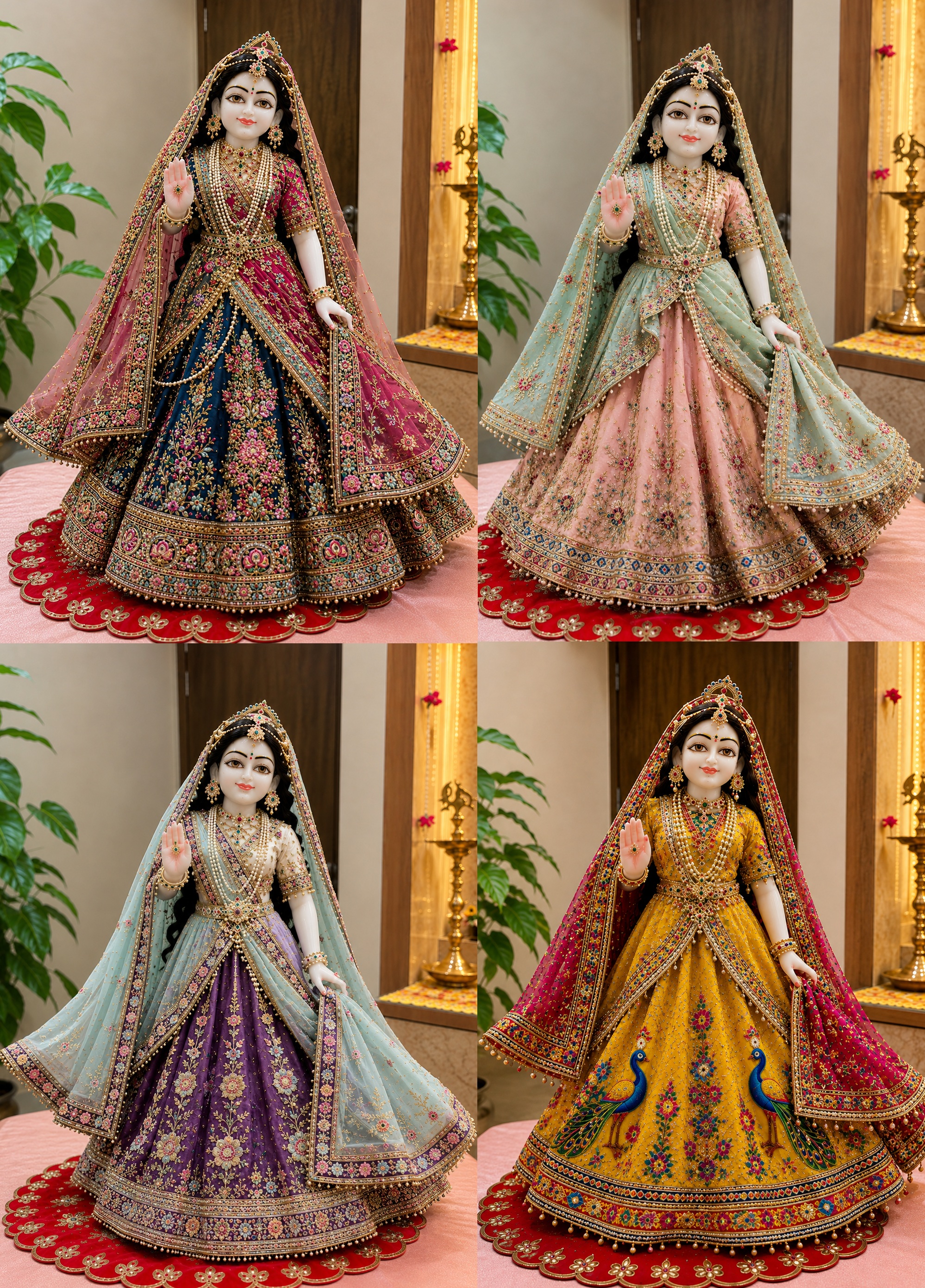
Colours for Radha Rani Ji on Radha Ashtami
Colour selection is one of the most visible parts of Radha Rani Ji's shringar, but it is better treated as a matter of devotional styling than as a rigid universal rule.
Different Vaishnava traditions, temples, families, and seva practices may favour different colour combinations.
Deep Rose Pink
Deep rose pink creates a warm, celebratory appearance and works naturally with gold embroidery. It is a popular direction for a festive Radha Rani poshak and photographs beautifully when paired with restrained metallic work.
Pale Gold and Saffron
Pale gold and saffron bring warmth and a traditional festive character to the presentation. Either can be used as the main colour or as an accent through borders, embroidery, or dupatta/chunri details.
A saffron Radha Rani poshak can also coordinate beautifully with a darker Kanha Ji dress when the two are later brought together as a Yugal Jodi.
Ivory with Gold
Ivory with gold embroidery gives a quieter, luminous appearance. It is particularly effective when the embroidery itself is detailed enough to carry the visual interest.
For a devotee who does not want an extremely bright festival palette, ivory and gold can feel elegant without looking plain.
Deep Pink and Magenta
Deep pink, magenta, and related shades can create a more vibrant festive look. These colours work especially well when the embellishment is balanced rather than layered over every visible surface.
A Practical Colour Rule
If you are unsure, start with the fabric and embroidery rather than choosing a colour simply because a listing calls it "traditional."
Ask:
- Does the colour suit the style of shringar followed in your mandir?
- Does the embroidery complement the base fabric?
- Will the colour work with Radha Rani Ji's jewellery and chunri?
- If She is part of a Yugal Jodi, what Kanha Ji colour will complement it later?
- Does the overall combination feel graceful rather than overcrowded?
The colour should support the darshan, not become the entire focus of it.
Choosing the Right Fabric for Radha Ashtami
Radha Ashtami falls in September, so fabric weight is worth considering. The ideal choice depends on your local weather, mandir environment, figure size, and the look you want.
Banarasi Silk
Banarasi silk can provide the body needed for detailed embroidery and zari while giving the poshak a rich drape.
For a more traditional festive presentation, it is a strong option.
Heavy Silk
Heavy silk can give a similarly rich appearance, particularly when paired with carefully placed embroidery or zari. It works well when the design needs some structure without becoming excessively bulky.
Heavy Georgette
Heavy georgette is lighter than many silk-based options while still providing enough substance for embellishment.
For September, this can be a practical choice when you want a richly dressed appearance without the thickness of winter fabrics.
Art Silk
Art silk can create a beautiful festival look at a more accessible price point. The important thing is to judge the complete garment, fabric, drape, embroidery, finishing, and stitching, rather than assuming the fabric name alone determines quality.
What About Velvet?
Heavy velvet can look beautiful, but it is generally better suited to cooler-season shringar. For a September Radha Ashtami poshak, silk, Banarasi, or georgette can provide richness without the same winter-weight feel.
Sizing Radha Rani Ji's Poshak, Measure Before You Order
This is one area where guessing creates unnecessary problems.
Measure Radha Rani Ji separately from Kanha Ji.
Do not assume that because the two figures are kept together, they require the same poshak size. Their actual heights and proportions may differ, and the way each figure is dressed can also affect how the garment sits.
For a basic height-based size reference:
- Remove the mukut from the measurement.
- Measure from the feet to the top of the head.
- Record the measurement in inches.
- Compare it with the seller's actual size chart.
- If the seller provides garment-specific measurements, check those too.
- If the design is heavily structured or heavily embellished, ask the seller how the garment is intended to fit rather than automatically sizing up.
The important point is simple: use the actual figure measurement, not a guess based on the other figure in the Darbar.
Our Laddu Gopal poshak size chart can be used as a reference for the measurement process and for understanding how deity poshak sizing is generally organised.
What to Look for When Buying Radha Rani Ji Poshak Online
Online photographs can make almost any poshak look impressive. The details in the product description tell you much more.
1. Read the Fabric Description
Look for a specific fabric name such as Banarasi silk, silk, heavy georgette, or art silk.
Be cautious with descriptions that only say "premium fabric," "rich material," or "luxury cloth" without telling you what the fabric actually is.
2. Ask What "Handmade" Actually Means
"Handmade" can describe very different levels of craftsmanship.
If a listing says a Radha Rani lehenga is handmade, look for details about the actual handwork:
- Is the embroidery done by hand?
- Which parts are hand-finished?
- Is the zari work hand-done or machine-applied?
- Is the piece individually made or machine-produced and then finished by hand?
If a listing calls something "handmade" but cannot explain the handwork specifically, that is a signal to ask more questions.
3. Look at the Embroidery Closely
Zoom into product photographs if possible.
Good signs include:
- Consistent stitching where consistency is intended
- Securely attached stones and beads
- Clean borders
- Neat finishing on the inside
- Embroidery that follows the garment's structure rather than looking randomly placed
Small variations can be normal in genuine handwork. Sloppy finishing is a different matter.
4. Be Careful With Zari Claims
A metallic-looking finish in a photograph does not automatically tell you what technique has been used.
Genuine zari and quality metallic embroidery generally have more dimensional texture and light reflection than a flat printed metallic finish. Ask the seller to identify the embroidery or zari technique rather than relying on the word "zari" alone.
5. Check What Is Actually Included
Before ordering, confirm whether the price includes:
- Main poshak
- Chunri or dupatta
- Lehenga components, if applicable
- Matching accessories
- Any separate blouse/choli component
- Packaging
- Customisation, if offered
A beautiful photograph may show several pieces while the listed price covers only one.
6. Check Lead Time
Handcrafted pieces can require additional time for embroidery, finishing, quality checking, and dispatch.
For a festival date like Radha Ashtami, do not leave a handmade order until the last few days.
How Radha Rani Ji's Poshak Relates to Kanha Ji's on Radha Ashtami
Once Radha Rani Ji's poshak has been chosen, Kanha Ji's becomes easier to coordinate.
A simple principle works well:
Complement, don't compete.
If Radha Rani Ji is wearing a richly embroidered deep rose poshak, Kanha Ji does not necessarily need another equally busy design. A complementary colour, similar visual quality, and compatible fabric weight can create a more balanced Yugal Jodi.
For example:
- Deep rose Radha Rani poshak → peacock blue or soft saffron accents for Kanha Ji
- Pale gold Radha Rani poshak → deep yellow or midnight blue for Kanha Ji
- Ivory and gold Radha Rani poshak → peacock blue or a restrained gold-toned Kanha Ji dress
- Deep pink or magenta Radha Rani poshak → soft yellow or complementary warm tones for Kanha Ji
These are styling suggestions, not rules. Your existing seva tradition should always come first.
For broader coordination ideas, see our Radha Krishna Yugal Jodi shringar guide.
If you are dressing the pair together, you can then choose a Kanha Ji poshak from our Laddu Gopal dress collection that complements Radha Rani Ji's colours and overall presentation.
A Simple Radha Ashtami Poshak Checklist
Before placing the order, check these seven things:
- Occasion: Is the design being chosen specifically for Radha Ashtami?
- Style: Lehenga, heavy poshak, Chunri Chandrika, or designer dress?
- Fabric: Does the fabric suit the September season and your mandir environment?
- Craftsmanship: Is the embroidery technique clearly described?
- Size: Have you measured Radha Rani Ji separately?
- Coordination: Will Kanha Ji's poshak complement Her rather than compete with Her?
- Timing: Is there enough time for making, finishing, dispatch, and delivery?
If all seven answers are clear, you are much less likely to regret the choice later.
Conclusion
Choosing a Radha Ashtami dress for Radha Rani Ji is not simply a matter of finding a festive-looking garment.
It is a small part of the day's seva.
Start with Radha Rani Ji. Think about the style of shringar you follow, the colours you naturally offer, the size of Her figure, the season, and the craftsmanship of the poshak. Then build the rest of the presentation around that first decision.
A beautiful Radha Ashtami darshan does not depend on how much embroidery has been added.
It depends on whether everything looks as though it was chosen with care.
That is where a well-made Radha Rani poshak makes the difference, not because it is simply elaborate, but because the details come together with intention.
Continue Your Radha Ashtami Preparation
- Radha Ashtami 2026, How to Dress Radha Rani Ji and Laddu Gopal for a Beautiful Yugal Jodi Shringar
- Radha Krishna Yugal Jodi Shringar, Complete Coordination Guide
- Laddu Gopal Poshak Size Chart, Complete Measurement Guide
- How to Choose the Right Mukut for Kanha Ji
- Laddu Gopal Dress Collection
Frequently Asked Questions
What is the best Radha Ashtami dress for Radha Rani Ji?
A handcrafted Radha Rani lehenga or a richly embellished Radha Rani heavy poshak can be a beautiful choice for Radha Ashtami. Deep rose pink, pale gold, ivory, and saffron are among the colour directions used in devotional styling. The better choice depends on your seva tradition, the figure's size, fabric, craftsmanship, and overall presentation.
Which colour is best for Radha Rani Ji on Radha Ashtami?
There is no single colour that every devotee must use. Deep rose pink, pale gold, saffron, ivory, and related festive shades can all be styled beautifully. Choose a colour that suits your devotional tradition and works naturally with the fabric, embroidery, jewellery, and overall shringar.
What fabric should I choose for Radha Rani Ji's poshak in September?
Banarasi silk, heavy silk, heavy georgette, and art silk with quality embellishment can all work. For September, many devotees prefer rich fabrics that give a festive appearance without the thickness of heavy winter velvet.
What is the difference between a handcrafted Radha Rani lehenga and a Radha Rani heavy poshak?
A handcrafted lehenga generally has a more structured silhouette and places greater emphasis on individual hand embroidery and construction. A heavy poshak can offer substantial embellishment in a simpler garment structure. Both can be appropriate for Radha Ashtami.
How do I size Radha Rani Ji's poshak correctly?
Measure Radha Rani Ji from feet to the top of the head, without the mukut, and compare the result with the seller's size chart. Measure Her separately from Kanha Ji rather than assuming both figures need the same size. For heavily structured designs, ask the seller about the intended fit before choosing a different size.
Should I order a new poshak for Kanha Ji as well for Radha Ashtami?
Not necessarily. If you keep a Yugal Jodi, you may choose to dress both figures for the occasion, but Kanha Ji's new poshak is not a requirement for choosing Radha Rani Ji's Radha Ashtami dress. If you do coordinate both, choose Kanha Ji's dress after Radha Rani Ji's so the pair feels intentional.
Radha Ashtami ke liye Radha Rani Ji ka poshak kaise chunein?
Radha Ashtami ke liye Radha Rani Ji ka poshak pehle choose karein aur phir Kanha Ji ke poshak ko uske saath coordinate karein. Deep rose pink, pale gold, ivory ya saffron jaise colours devotional styling mein khoobsurat lag sakte hain. Banarasi silk ya heavy georgette jaise fabrics September ke liye achhe options ho sakte hain. Size hamesha Radha Rani Ji ko alag se measure karke choose karein.